Tour of Lost Birmingham Nᵒ.24: Pratchett's Bull Ring (High Street)

Often described as the work of William Hollins
but Thomas Hollins originally made the drawing in mid 1811 and published
prints from it in 1812; as recorded in newspapers of the time. 

Drawing of the Bull Ring area and St. Martin's church by Thomas Hollins, 1811.

One of the most changeable sites in Birmingham is the Bull Ring, it has undergone several alterations, each with some contention. The iconic Selfridges building sits, today, just to the left of the church; if it were to be placed in the scene above it would fill the sky above the little Georgian shops, and probably leave the people dumbstruck at what their town will become. The scene today could not be more different, the church is the oldest building but was rebuilt in the 1870s. Admiral Nelson (the statue, centre) still stands watching over her as he did from the day he was first unveiled in 1809.


Mr. Parkes visits Birmingham after a period of time
and enthusiastically notes the changes to the
main market area around St. Martin's church. 1810.
I call the area in Hollins's drawing 'Pratchett's Bull Ring' as Richard Pratchett, a High Bailiff, was one of the most influencial Street Commissioners of the time and his 'fundraising had substantially assisted the Street Commissioners in their grand scheme' (Upton). This 'grand scheme' was the alterations initiated by an act of parlaiment in 1801 to the areas around Birmingham's markets including the Bull Ring which involved removing the shambles (old tightly packed butcher's shops), the Welsh Cross and a number of other buildings which opened up the area around St. Martin's in the way it is characterised by today (see left). Pratchett himself lived and ran his business near the Bull Ring (image here), which was a druggist's and grocer's, a business that he inherited from his uncle, Thomas Carless, near the Swan coaching inn. Pratchett had left his particular mark on the improvement scheme around St. Martin's when he commissioned Thomas Hollins's brother William to design a sculpture that would surround the water-pump that had become exposed after the shambles was removed.

In 1806 William Hollins put forward a proposal for the monument of Lord Nelson which the Street Commissioners had proposed, but lost out to Sir Richard Westmacott whose work can be seen above. William’s design was much more complex and expensive in comparison with the simple statue that was chosen and included a post office and dispensary. A year later Pratchett asked him to design the water conduit to surround the pump but the design proved very unpopular. William called the sculpture the 'Egyptian Conduit'; many local people named it 'Pratchett’s Folly'. It was designed as a tribute to Nelson’s victories on the Nile, and may have been an elaborate show of what William could have done with the previous Nelson monument. It was in the shape of a pyramid, combining Egyptian, Grecian and English styles, and was ornamented with papyrus, Grecian honeysuckle and a lion’s head, all with associated mythological symbolism, and crowned with an urn which was a representation of the ashes of Nelson.* It can just be seen in the image above in front of St. Martin’s, just behind the first pair of horses. It seems that the sculpture was thought of as pretentious, with too much symbolism, unlike the statue of Nelson which was a simple tribute.*

Richard Pratchett was, of course, not solely responsible for the changes to the Bull Ring of the early nineteenth century; there were other Street Commissioners, 120 in fact. Yet, in another sense, it was Pratchett's Bull Ring. He had been a major part of the changes, he lived there and saw it everyday through his window, and it probably felt like 'his place', like every other individual might feel like they belong to a place and who make a bond to their location, it is a very human thing.

In 1812 J. C. Stadler produced a coloured version of Thomas Hollins's etching. Above (right) you can see the Georgian St. Martin's church in more detail with 'Pratchett's Pump' by William Hollins tucked into the church wall. Green fields can be seen in the distance. The left imaged depicts shop windows, still looking homely and decorated with curtains; a couple of the shops seem to have small images pasted to the insides of their windows. The full image is below.   


NOTES
William Hollins was also commissioned to build the Public Office on Moor Street which was part of the Street Commissioners improvements of this time too. As High Bailiff, Richard Pratchett was the chosen representative of the Commissioners and laid the first stone on 18 Sep 1805.
* References on request

Drawing Room Drapery


Richard Hicks Bridgens' book Furniture with Candelabra and Interior Decoration (1838, read the book here) covered interior designs in the Grecian, Elizabethan and Gothic styles, and depicts a time when styles were changing from the classically inspired, quite sensual interiors of the Regency era (above), to, for Bidgens, the more Gothic inspired. Architecture was being influenced by the Gothic at this time; Charles Barry's Gothic masterpiece (King Edward's School on New Street) had been completed in Birmingham in 1834, and Bridgens, who had returned to Birmingham briefly to work on furniture at Aston Hall, was probably inspired by these new ideas when producing his book. As the designs are from a pattern book, we cannot know if anyone took up Bridgens armoury idea (below), especially as it is a very literal representation; Gothic architecture is one thing, but a Gothic drawing room is not particularly cosy.

Paper Remnants Nᵒ.2: The First Birmingham Stage-Coach


Print of a poster from May 1731 advertising the first regular stage-coach from Birmingham to London. The journey took two and a half days; but notice the get-out clause 'if God permit', allowing for anything from bad roads (which were common), poor weather (this is England) and any other eventuality that may be thrown at the journey. A regular stage-coach means that Birmingham's traders and manufacturers have a cheaper and easier way to reach the capital in order to make and maintain business connections. Take a journey on the London to Birmingham stage coach here.

London to Birmingham, by Coach

The London to Birmingham Stage Coach by John Cordrey, 1801. The coach,
full of passengers, includes a wedding party & is eight miles from London.   

Edit: The motifs painted on the side of the coach depicts two balloons (on the two side panels) either side of a Swan with Two Necks (painted on the central door). The Swan with Two Necks was a public house on Lad Lane in London, so the motifs shows that the coach was likely the Birmingham Balloon Post Coach, as noted in newspapers as stopping at the Swan with Two Necks. Detail provided with thanks by Tom Nicholls. 


As the London to Birmingham stage coach passes by, one friendly passenger raises his hat; another drinks heartily and seems ready to alight rather prematurely. The pace of Cordrey's coach seems very slow and easy, which could not be further from the truth. Our passengers would have been jolted all over the place as they sped over the bumpy roads, and considering that the speed of the coaches was of great importance, the comfort of passengers was often overlooked. For many wealthier travellers, the stage coach was an inferior mode of transport, the genteel Hotel on Birmingham’s Temple Row was proud to state that it did not have the ‘annoyance of stage coaches’ (visit the Hotel). Most of the other main inns in Birmingham had stage coaches running to and from them though, in 1830 you could catch one of several coaches from the Albion, Castle, Fountain, Hen & Chickens, Nelson or Swan everyday.*    

The first regular weekly stage coach between London and Birmingham was initiated by Nicholas Rothwell in 1731 (see poster) and made the journey in two and a half days (down from coaches taking four days in 1659 and three days in 1702).* By 1742 faster coaches, named 'flying coaches', were making the journey in only two days, and different proprietors ran different routes; the Lichfield and Birmingham route began on 12th April (see cutting below) and a competitor, Robert Coles, began his Birmingham and Warwick coach less than a month later, running in the summer season, when the roads were safer.* In 1747 a journey on the Birmingham and Warwick stage coach to London cost 1l 5s, but the traveller was 'answerable for jewels, rings, watches, money, or plate, unless paid for after the rate of three-pence for every twenty shillings value' revealing the possibility of attacks from highwaymen.* In May 1742 an infamous highwayman called Mansell Sansbury who worked the roads near Banbury was finally arrested with an accomplice after stealing from a London to Birmingham stage coach and later being found passed-out drunk in a field. Highwayman was only Sansbury's 'part-time job', as most of the time he worked as a grocer in Banbury.

By 1783 thirty coaches were leaving for London from Birmingham each week, and were run by inn keepers as well as indepenent companies. One London to Birmingham route went via Oxford and Stratford-upon-Avon and this was the route that William Hutton travelled in 1784, and subsequently wrote about a year later (though the book relates more to his stay in London than the journey which is a shame). On the route from London, you would travel all night, take breakfast and change horses in Oxford, and then dine in the evening at Stratford before moving on to Birmingham.* Later, in the 1820s, when this journey would only take one day, the stay in Stratford was limited to only a few minutes.* The journey became much quicker, and safer, into the beginning of the nineteenth century, due to some improvements to the roads. Between the 1820s and 1840s was the peak of coach travel; more coaches were leaving and arriving in towns like Birmingham than ever before, and, after the coming of the railways, ever would again.

The railway arrived to compete with stage coach travel from the late 1830s and slowly ate into the trade of coaches, the travel was faster, more comfortable, and it was even declared that it had medical benefits:

'With respect to the comparative advantages, in point of healthful exercise, between riding on the railroad and on the ordinary roads, there can be but one opinion, the oscillatory motion of the Railway carriage being much more salutary than the swinging, jolting motion of the stage coach. Dr. Johnson, a medical man of long experience [...] says, "The former equalises the circulation, promotes digestion, tranquilises the nerves, and often causes sound sleep during the succeeding night; the exercise of this kind of travelling being unaccompanied by that lassitude aching, and fatigue which, in weakly constitutions, is the invariable accompaniment of the ordinary coach travelling, and which so frequently in such constitutions produces sleepless nights"'.*

The 'Tally-Ho' London - Birmingham Stage Coach Passing Whittington
College, Highgate. 1836 by James Pollard


Take a stage coach to London past by visiting this great post on Regency London here. On the English Historical Fiction Authors blog. 

NOTES
* References on request

The Cock and the Redd Lyon in Digbeth, The Talbot and The Dogg in Spiceal St, The Dolphin in Corn Cheaping, The Horseshoe in St. Martins Lane, The Swan in High Street , The Garland and the Starr in High Town, The White Hart , Fleur- de- Lis in Moor St, The Angel and Hen and Chickens in High St.

In Anticipation of Absence: New Lost Birmingham at Central Library

The paintings that adorn Central Library at present (2012), seem to me to be saying 'goodbye' to it as much as marking its presence. The building will be replaced in the next few years, but at present it "converses" with neighbouring buildings and objects, such as in the reflections of the Council House in its glass (different from every angle), and the red of this years flowers which compliments the red berries.

The murals on the library are by Lucy Mclauchlan.

Tour of Lost Birmingham Nᵒ.23: Asserting Difference - Division Inside Christ Church (Victoria Square As It Was)

Christ Church from the collection at Birmingham Art Gallery, c. 1850.

Absent building. Stood from c. 1805 till 1899. 
Explore inside and outside Christ Church by clicking here.

Christ Church, that sat where New Street and Ann Street met, was the first church in Birmingham to offer free pews for the poor. The population had been rising so rapidly in Birmingham that space in the churches was squeezed, and with the additional drawback of payment, the wealthier classes feared that the poorer amongst them would begin to not attend church which could trigger 'Indifference to the highest Duties, Violation of the Sabbath, and Depravity of Morals'.* In 1805 Isaac Hawins left £500 (later increased to £1000 by his executors) to the opening of a free church, and the project was initiated, though with struggles to find additional funding, the church was not consecrated till 6th July 1813, still unfinished. The church was divided into separate areas; the free seats on the ground floor and the paying pews in the galleries around (see painting above), each accessed by separate doors.

The galleries were accessed by a central door at the front of the church, inside of which was a ‘double flight of stone steps, of geometrical construction, with balustrades of elegant appearance, which [... were] formed of tubes of iron coated in brass'.* The galleries themselves were fronted in mahogany, attractively decorated and supported by elegant Doric columns;* it was these seats that helped to pay for the running of the church. The free seats were reached from one of two side doors that were also placed at the front of the church, the doors could have been more separate, but still maintained a division so that the wealthier church goers did not need to mix with the poorer among the congregation even as they filed into the church. These free pews were also of mahogany but of a much simpler design. At the front of the church was the finely carved altarpiece, which was surrounded by brass railings above which was 'painted a cross appearing in the clouds, by Barber' (just visible in the painting).* Those writing about the church particularly noted the organ by Thomas Elliot, who made the organ for the Chapel Royal in St. James' Palace, among others.

This layout of Christ Church is an example of class separation and asserting difference by physically and visually sectioning off parts of the built environment. The poor below, would have felt their inferior situation as the wealthier sat above them, possibly keeping an eye on their behaviour and their morals.

During the 1830s Christ Church was divided in another way, probably by Rev. John George Breay, an enthusiastic Evangelical preacher who was at Christ Church from 1832 till his early death in 1839. At this time the church became separated between men on one side and women on the other and the practice gave rise to the following verse:
'Our churches and chapels we generally find
Are places where men to the women are joined;
But at Christ Church, it seems, they are more cruelhearted,
For men and their wives go there and get parted.'*
There seems to be no explanation of how long the practice took place; whether it was a short-lived experiment that ceased due to, perhaps, critisism from sources such as the verse, or whether it was continued. But at this time Evangelical preachers, among many others, were asserting difference between men and women. Breay himself believed that women needed skills that would help to 'qualify [them] for social duties' by this he means 'as wives, mothers, or friends',* basically in an supporting role. Throughout Breay's own life he was supported by his wife Phyllis, she established and ran a clothing club as well as a great deal more, and after her husbands early death continued to work tirelessly for charitable causes for another 30 years, as well as writing at least three books. Her gravestone at Christ Church recorded her as Breay's widow, helpmeet and the mother of his children, ignoring all of her own achievements.* 

The inside of Christ Church during demolition in 1899, with two details
of the interior decoration. The clouds from Joseph Barber's painting are
just visible, as is some carving and painted decoration.


NOTES
* References on request

Tour of Lost Birmingham Nᵒ.22: Intellectual Snobbery & Hollins's Dispensary (Union Street)

Part of the classical aedicule that topped the door to Union Street's
dispensary. Made from cement designed to look like stone, by William
Hollins c. 1808. This sculpture is the only surviving part of the building.
The text reads: 'OF THE MOST HIGH COMETH HEALING'. This sculpture
is now part of the Birmingham History exhibition at BMAG.

Self trained architect William Hollins often encountered criticism against his architectural designs. When he completed the dispensary on Union Street in 1808 some called it a handsome or attractive building though others complained of a 'plain stone building [...] devoid of all claim to architectural elegance'.* The worst criticism of the Dispensary came in 1825 when Hollins was slated for having ‘wantonly violated correctness, and [...] needlessly run into preposterous inventions’.* The study of classical architecture was an intellectual discipline as well as an aesthetic one; it was highly mathematical and required the study of classical examples from books written on the subject to get the correct proportions. To understand the language of classical architecture was to be educated; it was logical and rational representing the height of public order and civility, and not about taking flights of fancy into the realms of individual imaginations. Hollins, though, had come from humble beginnings, and  the censure was probably as much about class as technique. Perhaps William West argues best in 1830, that the great good achieved from the medical aid given at the Dispensary ‘more than compensate for any want of taste in the exercise of the chissel [sic]’.* See for yourself (image below) whether you think that Birmingham has lost out in this building being demolished.

Hollins's Dispensary building had opened in 1808 to accommodate the highly successful venture that had begun in Temple Row, growing from strength to strength since its beginnings in 1794 (visit the Temple Row Dispensary here). The Dispensary served poorer patients who paid voluntary subscriptions of, in 1825, one or two guineas a year; one guinea receiving four sick tickets and one for midwifery.* Patients in great need but without financial means could get treatment as well, often on the recommendation of a subscriber; and some free services were offered, for example, in 1836 patients could receive free inoculations on Monday's and Thursday's* (a table containing some of the numbers helped is below). The Dispensary was also supported by donations from the wealthy, and many of the physicians and surgeons offered their services free of charge.

The Dispensary on Union Street by William Hollins, built 1806-1808.

Entrance to the building after it had closed as a dispensary.
Held at Birmingham Archive


NOTES
* References on request.
Patients Treated 1814, 1824, 1828 & 1829.
1814: SICK-2051. MIDWIFERY-355. INOCULATION-767
1824: SICK-2042. MIDWIFERY-558. INOCULATION-1118
1828: SICK-3545. MIDWIFERY-798. INOCULATION-1614
1829: SICK-3097. MIDWIFERY-810. INOCULATION-2068
Some physicians at the Union Street Dispensary
c. 1814-1821: Dr. John BOOTH (and the Birmingham Infirmary)
1822-1833: Dr. John DARWALL (Detailed information on Darwall here.)
Oct 1835-?: Dr. Thomas Ogier WARD (previously at Wolverhampton dispensary and studied the cholera there in 1832).

The Dinner That Caused a Riot?

A BIRMINGHAM TOAST, published 23 July 1791 following the dinner
at the Hotel which fired the Birmingham riots beginning 14 July 1791.
Published in London.

Visit the Hotel here

The image is meant to depict the Constitutional Society of Birmingham that held a 'French Revolution Dinner' at Birmingham's Hotel to commemorate the second anniversary of the storming of the Bastille on 14th July 1791. The event has been transformed into a satirical cartoon by James Gillray, representing the London viewpoint of the riots and containing a number of false embelishments, one being that Joseph Priestley (standing, second from left) did not attend the dinner at the Hotel, nor did many of the others shown (see below) who lived a good distance from Birmingham. The dinner had caused a stir amongst some of Birmingham's inhabitants who believed that those attending were unpatriotic, and who had been antagonised by a seditious hand-bill that had been distributed a few days before the dinner, though all at the dinner denied any connection with it. But this was before France's King had been executed (which occured in January 1793), and before the full bloody violence of the revolution had truly begun. James Gillray took a conservative stance to the Revolution from the beginning and often ridiculed both it and those who believed in it's ideals.

On the evening of the dinner, the 80 or 90 diners were hissed at as they arrived, then the rioting began later that evening when a mob arrived at the Hotel and started smashing windows. The mob were pursuaded to move on by the Hotel's proprietor Thomas Dadley, but then the rioting continued for another three days. It was easy for those critical of the Revolution in France to blame the dinner, but as we have found more recently in the riots of August 2011, one thing may trigger an anger that has been deep rooted for a considerable amount of time. Joseph Priestley, who was pinpointed by Gillray, was a religious dissenter (specifically, a Unitarian), and he with a large number of other dissenters were targeted by the rioters and their homes destroyed. Priesltley, although not present, describes the dinner as it led up to the riot, and specifically mentions how the chair of the dinner was a church of England man:

"When the company met, a croud [sic] was assembled at the door, and some of them hissed, and shewed [sic] other marks of disapprobation, but no material violence was offered to any body. Mr. Keir, a member of the church of England, took the chair; and when they had dined, drank their toasts, and sung the songs which had been prepared for the occasion, they dispersed. This was about five o'clock, and the town remained quiet till about eight. It was evident, therefore, that the dinner was not the proper cause of the riot which followed: but that the mischief had been pre-concerted, and that this particular opportunity was laid hold of for the purpose."
For Priestley, the dinner was a contrived reason for rioting, as it was easier than voicing fears and predjudices towards the dissenting groups in Birmingham. But what causes riots is something that we may never be able to truly describe, there is often a friction that builds up between different groups of people who want different things, and from the fear of the desires of others.

INFORMATION ABOUT THE PRINT
The print reads: 
A BIRMINGHAM TOAST, as given on the 14th of July, by the ----------* Revolution Society
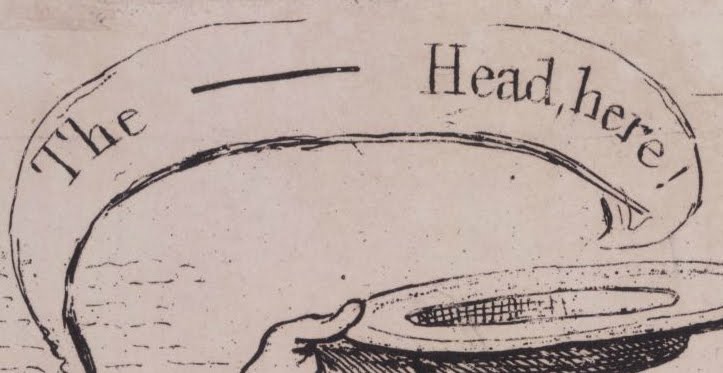
Joseph Priestley (standing) holds up a chalice and communion plate and states: "The King's* Head, here!"
Sir Cecil Wray (on our left) with a reddened face, pours himself some sherry and exclaims "Damn my eyes! but I'll pledge you that Toast tho Hell gapes for me". In the orange coat Richard B. Sheridan declares"O Heavins [sic]! why I empty a Chelsea Pensioner's small-beer barrel, in such a cause!". Charles James Fox's (centre) portly face is also reddened and as he raises his glass he says"My Soul & Body, both, upon the Toast!!!". Next to Fox is Horne Tooke who states"I have not drunk so glorious a Toast since I was Parson of Brentford, & kept it up with Balf & McQuirk!". To the right a rather drunk looking Theophilus Lindsey is saying"Amen, Amen". Behind this group are charicatured religious dissenters, from left to right saying:
"Hear our Prayers: & preserve us from Kings, & Whores of Babylon!!"
"Put enimity between us & the ungodly and bring us down the Heads of all Tyrants & usurpers quickly good Lord--Hear us"
"O, grant the wishes of these inheritance"
The frame on the back wall shows St. Paul's Cathedral, with three pigs eating from a trough, underneath it reads: 'A PIG's STYE, a View from Haskney'


* There are a couple of alterations within the above image, firstly the word 'King's' has been written into Priestley's quote, though later productions show only a dash (both above). Also, at the base of the image a word has been covered up (see below), and other prints show this incorporated. It may be that this was one of the original prints by Gillray and the alterations were made for legal reasons. All those at the dinner were adamant that no toast was made for the head of the King.


A Young Man in Town, Master Bisset

A fashionable man from c. 1780. James
Bisset describes a similar mode of dress
on the day he arrived in Birmingham.

James Bisset first arrived in Birmingham in 1776 as a young 16 year old ready to join his elder brother who had been working in the town already.* James had been expecting to find a ''black and dismal town, smoky and unhealthy', but was delighted to discover that it had many fine streets, good brick buildings and one of the most handsome churches he had ever seen.'* He describes his attire on the day that he arrived in the town:

"I was dressed [...] in white kerseymere vest & small clothes, a light blue coat, white silk stockings a pair of light pumps with silver buckles, a light stock with a stock buckle set with Bristol stone, a ruffled shirt & frill of lace worked by my sisters of which I had six others in my dressing trunk (exclusive of half a dozen other shirts with plain muslin ruffles which were then generally worn by every person the least genteel). My hat was a small cock & pinch."*

'kerseymere vest' was one made of a fine woolen cloth with a fancy twill weave, twill being a pattern of diagonal parallel ribs (tweed is one form of twill pattern).
Although not mentioned, James would have been wearing knee breaches (like the ones above) with his 'white silk stockings' which both men and women wore. The buckles on his shoes could have possibly been made in Birmingham as there were a large number of buckle makers in the town.
A 'stock' was a band of linen folded or swathed around the neck, and the buckle held the fabric in place. The 'Bristol stones' set into James's 'stock buckle' were a kind of soft diamond-like crystal found in limestone only found in the Clifton area of Bristol.
The 'cock & pitch' or cock-and-pitch hat was as can be seen in the image, a three cornered hat, pinched at each corner.

We can see from his description that James was styled as a fashionable young gentleman, but his future was not certain; he had no fortune and had to make his way in the changeable world of business and industry that Birmingham offered. He was apprenticed to a japanner (Bellamy's) and painted landscapes, flowers and fruit, and other decoration onto snuff boxes and waiters, working 12 hours a day. Not all of his fellow apprentices achieved as great a success in life as Bisset, and James really worked hard for all he accomplished.*
* References on request
Books and articles used:
Leonore Davidoff & Catherine Hall, Family Fortunes
Maxine Berg, Inventors of the World of Goods

Tour of Lost Birmingham Nᵒ.21: Medicines for the Poor - The Dispensary (Temple Row)

The dispensary on Temple Row (far right), next to Styles's Hotel, c. 1800.
The building had originally been a dwelling house built in around 1720,
reputedly by William Westley.

When writing the previous post about the Hotel on Temple Row, I noticed in the picture used (included above also) that one of the houses near the Hotel was being used as Birmingham’s dispensary. I had conducted some research into the dispensary on Union Street (built 1806-08), as it was designed by William Hollins, and although I knew it had earlier beginnings I had not looked into where those beginnings lay. Finding it in the image spurred me to have a look at the history of the dispensary. There is more than one way to look at an image, which is why this post includes that same image. The last post explored the opulent and exclusive hotel, its post-chaises and assemblies with the image being used to represent that world, yet in about the same year (c. 1800) there was an outbreak of typhus which particularly affected the poor who were suffering due to deficient harvests. Dr. Bree was physician at the dispensary that year and helped to administer remedies to those suffering (explored below), and many of those would have come to Temple Row’s dispensary looking for help for themselves or their family. This forms a stark contrast that is not instantly visible in an image, and was not meant to be captured by the artist.
----------
In 1792 an idea began to grow among a few of Birmingham’s inhabitants to begin a dispensary based on those begun in London and that had been popping up in other provincial towns. The dispensaries dealt with lighter medical cases providing a service for the poor distributing medicines, offering medical assistance, inoculations and midwifery services. In William Hutton’s words, the aim of the dispensary was;
“[t]o supply the industrious of the labouring classes, who are not able to pay a surgeon for his services, with medical and surgical relief, for the payment of a trifling subscription. It also affords, by the contribution of the opulent and benevolent, relief to those who are unable to contribute any sum themselves.”*
The first dispensary opened in 1793 in the building on Temple Row; in the first year of its life 325 patients were treated (246 sick patients, 48 midwifery patients and 31 inoculations).*

Dispensaries became popular as they provided a more basic service which supported the work of hospitals (like Birmingham’s own hospital on Summer Lane). They also came about at a time when there were growing concerns about the distribution of wealth marked by the success of many industrialists,* and the continuing poverty of those who turned the industrial cogs from the very bottom. It is worth noting that Birmingham had struggled for many, many years to open its hospital due to lack of funds coming in from the town’s wealthier inhabitants, much to the shame of some. The dispensary’s success probably came due to the early involvement of Matthew Boulton (in 1793), the wealthy proprietor of the Soho manufactory, who stated that ‘if the funds of the institution are not sufficient for its support, I will make up the deficiency’.*

Institutions like dispensaries were part of a surge of philanthropic endeavours of the time but, as Roy Porter also states, they also acted as a kind of ‘social balm’.* The assistance of institutions like dispensaries covers up the fact that the poor needed charity because their wages were too low to pay for their own health care, or to maintain a lifestyle that would engender better health. An instance of this can be seen during the national outbreak of typhus in 1799 and 1800, which affected Birmingham badly and was attended to by the then physician of the dispensary, Dr. Robert Bree. Bree states that provisions in those years were scarce and dear, due to bad seasons, and that there was want for employment; he states that’ [m]any families had subsisted on barley and potatoes, in scanty portions, for many months, frequently without even a pound of butcher's meat for their Sunday's dinner. I have seen not unfrequently beans boiled with salt and water in a soup, that served for food during several days'.* He noted that it was the poor that suffered the most greatly from the fever in those years due mainly to this lack of nourishment (you can see Dr. Bree’s remedies for the typhus below).

Dispensaries were predominantly an urban phenomenon, supporting the large populations of towns, but these greater populations also helped to develop medical knowledge as a single physician could view several instances of the same disorder. The variety and scope of experience that could be gained in the towns often attracted young physicians, and in 1805 it was stated that ‘Birmingham had, for a long period, been considered by the surrounding country as the seat of superior medical experience and authority’.* Case books though, were rarely kept (very few case descriptions survive for Birmingham) so it is difficult to gain insight into the kinds of ailments ministered to and treatments given, though physicians did sometimes record their findings in medical journals so as to expand medical knowledge.

The general interior layout of dispensaries was to have the dispensing department (where the drugs would be arranged, usually on shelves on the wall), waiting rooms, consulting rooms and private examination rooms on the ground floor, and then the committee rooms, the medical officers’ rooms and the housekeepers' rooms on the floor(s) above. It was probably not till the custom built dispensary was erected on Union Street that the accommodation was to this standard. The Union Street dispensary (which I will explore further in a future post) opened in 1808 and moved from Temple Row to that premises; and there the dispensary housed an apothecary, someone to compound and dispense medicines and a house midwife, as well as physicians (see notes below) and surgeons attending.

NOTES
* References on request.
DR. BREE'S REMEDIES FOR TYPHUS
Dr. Bree took much worth in Dr. James Currie’s treatment of typhus with aspersions (showers or sprays) of cold and tepid water, which he thought much more beneficial than the usual treatments of bark and stimulant cordials. He did give treatments of cordials as well though, and describes the recipe he used. 'Take oak bark bruised, and roughly powdered; horse radish roots sliced; of each, an ounce. Boil the oak bark in two pints of water, till one pint be consumed. Add, before the boiling is finished, the horse radish. Then cover the vessel till the decoction is cold, and strain it for use. Sometimes elixir of vitriol was added to this, and if purging was threatened, or general uneasiness was felt, thirty drops of tincture of opium were added to each pint. Two ounces were given every four or five hours'. Together with 'the aid of aspersion of water’ Dr. Bree claimed much success in the survival rates of his patients.
PHYSICIANS AT THE DISPENSARY
(if you can add to or alter this list, please add the details to ‘comments’ or email me)
At Temple Row1796-c. 1800: Dr. John Butt SALT recommended by Erasmus Darwin (see letter of recommendation here), retired due to ill health.
c. 1799-c. 1805: Dr. Robert BREE
1802-1804: Dr. ROGERS (died of scarlet fever contracted from a patient in 1804).
1805: Dr. MALE
At Union Street
c. 1814-1821: Dr. John BOOTH (and the Birmingham Infirmary)
1822-1833: Dr. John DARWALL (Detailed information on Darwall here.)
Oct 1835-?: Dr. Thomas Ogier WARD (previously at Wolverhampton dispensary and studied the cholera there in 1832).

Tour of Lost Birmingham Nᵒ.20: Staying in Style & The Hotel (Temple Row)

The Hotel, at this time known as the Royal Hotel, c. 1800. Drawn by T. Hollins
and engraved by F. Eginton. In this image is also pictured the Dispensary.

The Hotel sat on Temple Row, opposite the St. Philip’s churchyard area, surrounded by smart town houses that were used by the wealthy. It had been built in line with the circa 1720s houses (right of image) which were most likely built by William Westley. The building on the far right was used as a dispensary of medicines for the poor and is explored here.

The Hotel was erected in 1772 by tontine subscription and was the first building in Birmingham to adopt the French styling of hotel. The term was only just coming into use at this time, and it was used to promote what was basically an inn as a more fashionable and refined place to stay. The Hotel provided accommodation for travellers to Birmingham, food and also had a fine assembly room attached which was enlarged in 1804.* There is little specific information about the running of Birmingham’s Hotel but guests would have probably unloaded from their carriage to be taken into the main reception room and had their hats and coats taken by a servant; they could then be shown to their room, and it seems that some of the more elegant rooms were upstairs.* There would have been a dining room for meals, there was a bar, and some some hotels had a coffee room as well.* They were usually sitting rooms, and these may have been divided into separate rooms for the gentlemen and ladies. A courtyard for carriages and stabling for horses was at the rear of the Hotel, and accessed through the gateway on the left of the building (see image above).

The exterior of the building was quite simple and relatively unornamented but it was admired for this elegance and was thought a superior building. It also maintained a reputation as a higher-class establishment throughout its life.* Its higher status was partly due to it not having the ‘annoyance of stage coaches’.* Stage coaches were long distance coaches which stopped at specific points on a set route and were deemed an inferior way to travel by the wealthy, mainly due to the traveller being bound to the path of the coach, and having to share the coach with strangers. Travelling post was a much more desirable way to get from place to place as the hirer of the post-chaise could decide where the travelled, with whom and when (like a taxi or hire car, as post-chaises could be hired with or without a coachman).* The Hotel was known for excellent posting facilities, always required of an exclusive hotel; it could accommodate post-chaises and had ‘an extensive supply of horses and carriages [...] always in readiness’.* The mail coach also called at the Hotel.

The front entrance of the Hotel led to a ‘spacious saloon’ where guests would have been greeted, and at the extremity of which was a large, grand staircase which led to the assembly room. The assembly room was eighty feet long, thirty feet wide with a lofty ceiling; it had an organ and space for an orchestra as well.* Assembly rooms of the time were designed to impress and Birmingham’s Hotel was thought to be decorated in a most ‘tasteful and decorative manner’.* There were three cut-glass chandeliers, six large mirrors along the walls and it also contained five decorative cut-glass lustres, all designed to reflect and enhance the candle-light and produce a sparkling effect.* The season in Birmingham was through the winter when eight or nine dancing and card assemblies would be held, as well as three or four music concerts, all by subscription, so as to keep the entertainments for the elite and leading families.

* References on request
NOTES
The 1791 riots began at the hotel; find out more here.
To find out more about assemblies, click here.
ROYAL HOTEL: In 1805 the Hotel applied to become the Royal Hotel after HRH the Duke of Gloucester stayed; Princess Victoria (the future Queen) also stayed in 1830, among many other distinguished guests that the proprietors would often list in their adverts.
PROPRIETORS:
DADLEY and PALMER: c.1780, 1787 (Thomas Dadley & Fielding Palmer)
PALMER: 1789
DADLEY: 1779, 1791, 1793
W. STYLES: 1800, 1808, died 1809
WILDAY: 1814 (Wm. Wilday d. 1818) (Mary, 1824) (Mr. Wilday, 1829)
FREDERICK DEE: newly fitted in 1830, 1838


Trade card for Royal Hotel under Frederick Dee, 1838.