Showing posts with label Politics and Change. Show all posts

Tour of Lost Birmingham Nᵒ.53: Freeth's Coffee House & the Society Feasts (Bell Street)


Freeth's Coffee House was a tavern (more formally known as the Leicester Arms) on Bell Street, a lost street which would have stood under the complex of the new Bull Ring Shopping Centre. It was run by John Freeth (sometimes John Free), a local poet and political commentator, often known as Poet Freeth and printing publications such as The Political Songster. As with many coffee houses in the eighteenth-century, it was a meeting place, not just of people, but of ideas. Most well-known are the meetings of the Jacobin Club, a group of political radicals including James Bisset (toy-maker and museum keeper) and James Sketchley (printer and auctioneer). In his obituary in 1808 it was noted that Freeth would sing his poems and 'delight a large company with original songs, composed from subjects of a public nature, replete with wit and humour'.

The pub was the site of a number of dinners where the radical politics and current affairs of the day could be discussed. The call to these feasts was frequently through a few lines of poetry, printed in letterpress onto small cards. Here are some examples:

Click on the cards to enlarge.


Poet Freeth (John Freeth).
1730-1808.

Historic Graffiti: Georgian Graffiti & Political Discontent

"TIME YOU'VE ENJOYED WASTING
ISN'T WASTED TIME"
Advice from a graffiti artist beneath the M6 between Aston and Bromford. The concrete pillars of this 'underneath place' form canvases for graffiti, hidden from anyone but the most intrepid explorer (I was there following the River Tame through Birmingham). 

Graffiti is nothing new though (see this post about graffiti on Aston Church), and in Birmingham Archive there's a document where manufacturer and museum keeper, James Bisset, recorded the changing inscriptions on Birmingham's walls in the late 1700s. In the 1780s the inscriptions "BUCKLES" and "NO SHOE STRINGS" reveal how the waning fashion for shoe buckles was affecting local artisans who were going out of business and struggling financially. Many Birmingham buckle makers petitioned the King, who promised to wear buckles and not shoe laces, but fashion is a cruel mistress, and 'shoe strings' won the day.

I PREDICT A RIOT!

'The Test ____' published 20th February 1790. Depicting the percieved
threat of Dissenters to 'Church and King'. This cartoon helps to depict
some of the tensions leading up to the Priestley or 'Church and King'
riots in Birmingham on 14th July 1791.
Joseph Priestley is depicted in the bottom right corner.
'The Flame of Liberty' is about to burn down the building represented
by the symbols of Church (to the left) and King (to the right).


The cartoon above (published February 1790) is fictional, but depicts the perceived threat of the religious Dissenters by the mainstream Anglican church. Joseph Priestley (second image), a Dissenter, is shown as part of a mob bent on the destruction of Church and King (third image). The following post will explore this backdrop to the Priestley riots (also called the Church and King riots, as the mob were for "Church and King") that began on 14th July 1791, and were directed at the Dissenters.

After the Revolution in France there was a rising feeling in England that political change could occur here as well, both from those who desired it and those who feared it. But unlike France, the desire for political change here was greatly tied up with religion, as many fighting for political reform were religious Dissenters who questioned the Anglican church. Dissenters were not allowed to become Members of Parliament, nor study at university, due to the Test Acts that had been written during the Restoration to prevent Catholics gaining power. They wished to change this so that they could have more say, but Parliamnet seemed rooted in opposition to this. As well as this though, Dissenters, and others, fought for universal suffrage, the removal of Rotton Boroughs (boroughs with only a handful of residents where MP's could buy their way in) and to allow growing towns like Birmingham to send members to Parliament (as at this time Birmingham's thousands of residents had no representation in Parliament).

Dissenters attack the Church

Due to the restraint on education many ambitious Dissenters entered trade and manufacturing, which is why there was a strong base of Dissenting groups in Birmingham. By far the largest group were the Unitarians, of which Joseph Priestley was a part, as well as being preacher at the New Meeting House on Moor Street. Priestley was highly outspoken in matters of religion and politics, which worried many; Samuel Johnson stated that Priestley's 'work unsettles everything'.* After the French Revolution Priestley's fervour stepped up a notch, at one point comparing free enquiry to 'laying gunpowder, grain by grain'.* Although he later declared that the allusion to the Gunpowder Plot was unintentional, he became set in the eyes of his critics as a dangerous man, and was nicknamed Gunpowder Joe. Perhaps if Priestley's and the other Dissenters ideas on political reform had not been tied up with religion the story of this country may have been a different one.

Since the commencement of the French Revolution the friction between groups and ideas was heightened, there was fear of the air of revolution and at the beginning of 1790 Samuel Parr wrote that a 'storm is gathering, depend upon it [...] and if the church does not exert itself it will fall'.** The church certainly did exert itself as in 1790 George Croft preached at St. Martin's against the Dissenters and warned that 'while their meeting-houses are open they are weakening and almost demolishing the whole fabric of Christianity'.** The reply from Unitarian minister John Hobson was that Croft was 'viciously prejudiced [...] persecuting and abusive'. And Joseph Priestley himself was a prolific writer and published many pamphlets and leaflets addressing his opponents head-on. Within Birmingham a specific committee was formed to oppose the Dissenter groups, and by the end of 1790 troops were ordered as rioting or similar disorder seemed highly possible. This died down but in July 1791, after the the French Revolution Dinner was announced, trouble began to stir again.**

NOTES
* References on request
** This paragraph written using research from: R. B. Rose, The Priestley Riots of 1791

Paper Remnants: Your Invitation to the French Revolution Dinner (1791)


Dear Reader,

We would like to invite you to a Grand Dinner being held at Dadley's Hotel on Temple Row on July 14th to celebrate the second anniversary of Revolution in France. We aim to promote 'equal government' and a 'free intercourse' in promoting the 'Rights of Mankind'. If you are 'disposed to join the intended temperate festivity, [it] is desired [that you] leave [your] name at the bar of the Hotel, where tickets may be had at five shillings each, including a bottle of wine'. The dinner will commence at three o'clock and we expect near 100 gentlemen to attend, including, we have been advised, Dr. Priestley.

Yesterday Aris's Birmingham Gazette, printed, as advised, the announcement of our plans to dine (see below). There has been a little concern that attached to this advertisement the paper have stated that they will publish the names of the diners, seemingly to stir up animosity towards our gathering. If you are 'any friend of freedom' be not moved by this act, but although this will not subvert our celebration we propose to make our first toasts to 'The King and Constitution' and 'The Prince of Wales'. We are certain that the dinner will pass with no trouble.


Your sincerely,
J. D.

This is part of a series of posts about the Priestley Riots which took place in Birmingham from 14th to 17th July 1791; and this dinner was a significant spark. Dr. Priestley, after advice from friends, did not attend the dinner in the end, but this did not quash the angry mobs. Click here to see all posts about the riots and Joseph Priestley.

Tour of Lost Birmingham Nᵒ.42: The Birmingham Library & a Ticket to Knowledge (Union Street)


Leading up to the anniversary of the Priestley Riots, which occurred in Birmingham from 14th July to 17th July 1791, an exploration of the Birmingham Library in which Dr. Joseph Priestley was involved.

The Birmingham Library was not the first in the town, but was the first that opened up the world of knowledge to a wider section of society. The establishment was set up in 1779 by 19 men, all but one of whom were religious Dissenters, already open to inquiry. To join the library members paid a guinea (21 shillings), and then, from 1781, paid a further eight shillings per year, so this was by no means learning for all, but it paved the way for the advancement of learning through the classes.**

When Joseph Priestley came to Birmingham in 1780 the library found an enthusiastic supporter, one who had competently helped build other such institutions already, and so its management was entrusted to him. The institution had great hopes for a freedom of learning, the initial principal put forward by Priestley being that 'this institution can never answer the purpose of party, civil or religious, but, on the contrary, may be expected to promote a spirit of liberality and friendship among all classes of men without distinction'.* He believed that controversial literature, even his own, should not be included among the books. By 1786 the library committee contained a mix of the original Dissenter groups, as well as a higher proportion from the Anglican church, but surprisingly it was the latter who pushed to have Priestley's books included in the library. John Money believes this to be a purposeful 'manoeuvre' which 'produced predictable results. The acquisition of Priestley’s work was attributed not to the cabal on the committee but to the Doctor [Priestley] himself and his friends, and it was followed by a series of ostentatious Anglican protests and resignations'.*** After this Priestley promoted that all books, including both his own and those that contradicted them, should be included. But differing opinions caused tension, and eventually rupture within the organisation; in 1794, the library split into two groups becoming the Old Library, which eventually moved to Union Street, and the New Library, which became located in Cannon Street.*


In 1796 it was decided that the library needed a purpose built building for its expanding collection, and William Hollins was chosen to design and build the structure, left (I will explore the architecture of the building in a separate post). The building opened late in 1797, and the rent of the land was paid for by a Tontine Deed drawn up at the beginning of 1798. Tontine meant that a number of subscribers would pay a subscription out of which the rent would be taken out and the excess reserved. Each subscriber could nominate either themselves or another individual to the Tontine and whoever survived the rest received the lump accumulated sum; this is why it was often very young children who were nominated. Nearly 180 individuals were nominated (with about 150 doing the nominating) for the library Tontine Deed (details and names of these can be seen here).

Above the library was carved 'AD MERCATURAM BONARTUM ARTIUM PROFECTUS, ET TIBI ET OMNIBUS DITESCES' translated as 'resorting to the mart of sciences, you will grow rich, both for yourself and others'. The library itself definitely grew and flourished; in 1784 it had owned about 900 books but in its new home in Union Street this rose to more like 7,000 by 1799.* The libraries that were established across many of the towns were a step towards providing education and learning to a wider section of the population. Among all the names nominated for the Tontine Deed, of people who lived in or near Birmingham, nearly a third were manufacturers, especially those in the button and metal trades, another third were merchants, one sixth were gentlemen and the other sixth were predominantly,what were deemed as, higher professions such as doctors, attorneys, bankers, artists and churchmen.* This was a move in the right direction in supplying learning to those who had been excluded from it previously.


ABOVE: Late Victorian Union Street, but still retaining its Georgian and Regency architecture. In 1845 the library had been extended to the left, as can be seen in the photograph.

NOTES
* References on request.
Other sources are this article and **British History Online.
*** John Money, Experience and Identity: Birmingham and the West Midlands 1760 - 1800


Seal from library card, above.

Joseph Priestley in Birmingham: Religious Dissent and Political Change


Produced 1790 by William Dent, this charicatured representation of Joseph Priestley depicts him in a barrel with the word FANATICISM written on the side. The group in front ask if there is such a thing as a Devil, to which Priestley replies NO, but behind him is the Devil in flames about to skewer him. Priestley was progressive; he promoted free inquiry in religion, made prominent discoveries in science (he discovered oxygen) and dealt in radical politics including promoting the ideals of the French Revolution which had erupted a year previously. The cartoon is actually quite threatening, with the Devil stating that if Priestley 'had eyes behind [he'd] know better'. Just over a year later Priestley was taught his lesson for talking so candidly, as the rioters of 1791 burnt his home and the meeting house that he preached in to the ground. This was more than just questioning doctrine; Priestley shook the very core of established order. This spirit of questioning remained in Birmingham though, after Priestley abondoned the town following the riots, and it was one of the leading lights in political, and consequently social reform over the next few decades.

Tour of Lost Birmingham Nᵒ.32: The Bull Ring & the Spectacle of Bull Baiting (High Street)

Drawing by Samuel Lines Senior. Held by Birmingham Museum and Art Gallery.

The Georgian Bull Ring (part of Birmingham's market area, now a shopping centre) would have been a very crowded and muddled hodge-podge of buildings, many of which encroached over the roads and left scarce room for pedestrians, let alone carts. The Shambles was a group of butcher's shops, which can be seen on the right of the image, above, and filled the area leading to St. Martin's church (left). As the town grew this traditional market place became too small and crowded, and so, from 1801, the Bull Ring was cleared of many of the obstructions, including the Shambles. This was done by the Street Commissioners who were in charge of maintaining the town, and especially in keeping the markets running smoothly.

At the time when this whole area was cleared, a small metal ring was removed from the middle of the ground between the Shambles and St. Martin's church. These rings, that were found in other towns too (Ludlow still has a street called Bull Ring), were 'an iron ring that sticketh in the corne market, to which the bulles that are yearelie bated be usallie tied',* and it was one of these rings that had given the Bull Ring its name. Bull-baiting was a popular recreation in markets, dating back to origins perhaps in the 12th century. The bull would be attached to the ring and dogs would be set on it, this was thought to improve the quality of the meat and make it 'softer in digestion',* as well as provide 'sport' for the spectators in the market. In fact, there is evidence that bull baiting was developed not as an entertainment, but solely as the way to slaughter the meat of older bulls, which would often be tough, and was common practice for butchers.** It is no surprise that the Birmingham 'bull ring' was placed by the butcher's shambles, as it would be a short journey from the killed bull to having the meat then placed on sale.

There is very little evidence of the tradition of bull baiting in Birmingham's market, but if bull baiting began less as a sport and more as the common process of slaughter, this is not so surprising. The area known as the Bull Ring was first shown on the 1778 map, before that (1750 map) it was just the Shambles and the corn market recorded, so it could be that the ring was a late addition to the market area and the practice relatively short lived within the market place. Equally so, the actual ring could have been in place for many, many years, but the area only became known as the 'Bull Ring' at this time.

There are some mentions of bull baiting in the records. In the 1760s a man called John Cooper was given permission to bait a bull in the Bull Ring 'whenever he pleased' by the Lord of the Manor,* probably for the supply of baited meat, but Showell tells us that bull baiting was completely prohibited in Birmingham in 1773.* There were still attempts, though, to bait in and around the town in 1777:
'There have been great Disturbances in the Hamlets of Deritend, Erdington, Saltley, and other Places, in or near this town [Birmingham], occasioned by Bull-baiting, and other Methods made use of to collect disorderly People together, to the great Annoyance of the Publick Peace'.**
The reason for banning bull baiting at this time was less about any mistreatment of the animal and more about unruly groups of people and the 'unsanctioned use of the streets'.**

It was not till the early 1800s that the practice came under any real criticism with regards to cruelty to the animals involved. Although Birmingham was free from bull baiting by this time, many surrounding areas, especially in the Black Country, still maintained a number of blood 'sports', and complaints were issued in the Birmingham Gazette about the custom:
18 March 1828


The 'sport' was also thought to cause drunkeness, and alongside a blood-lust, consequently could lead to violence through fighting and domestic abuse, which are hinted at in the article. Bull baiting was finally banned by law in 1835, though the last known instance in England was in 1838 near Birmingham Heath on the outskirts of the town.*

Bear baiting in a provincial town, 1749. The bear is being
taunted and hit with wheel-barrows.


NOTES
Top image drawn by Samuel Lines Senior
* References on request
** Emma Griffin, England's Revelry: A History of Popular Sports and Pastimes, 1660-1830.

Tour of Lost Birmingham Nᵒ.26: "I have for ever quitted Birmingham as a home" (High Street)

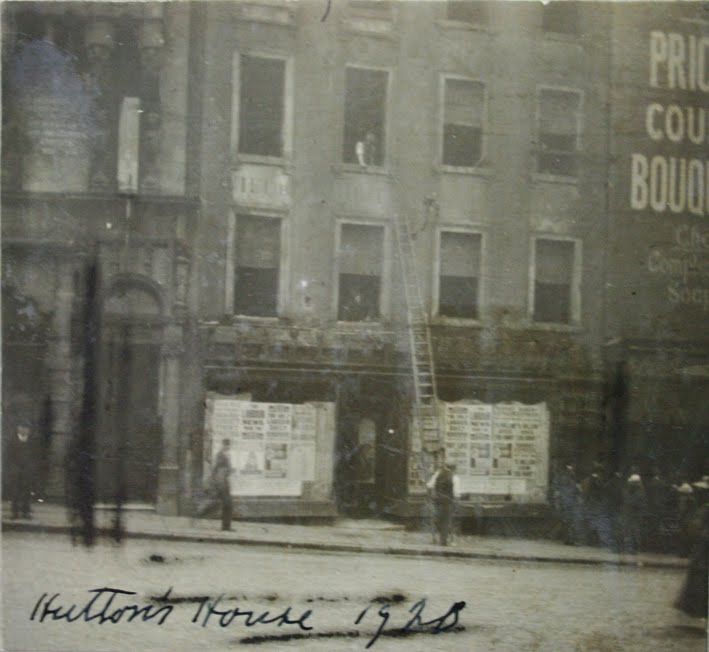
William Hutton's house and shop in High Street, Birmingham, as it was
being taken down in 1928. It was the events that occurred at this house in 1791,
as well as elsewhere in Birmingham, that caused Hutton's daughter Catherine
to declare that she would never live there again.
Held at Birmingham Archive.

Catherine Hutton stated in 1791 'I have for ever quited Birmingham as a home', no-one knew if she meant it, but she never did return to live in Birmingham again, and she had good reason to want to stay away. The 14th of July 1791 was the day of the King and Country Riots, it all boiled up after a few men met at the Hotel to celebrate the anniversary of the storming of the Bastille and the ideals of the French Revolution. Here, a few windows got smashed, but the riot soon spread across Birmingham and most houses did not get off so lightly, many were burnt to the ground, though William Hutton's house on High Street was saved that fate as the neighbours protested in fear that it may spread to their own homes. The rioting was targeted towards religious dissenters*; research and conjecture as to why this was the case could fill an essay in themselves, so here I will only note that William Hutton was a dissenter, and one, like many others in Birmingham, who had done well for himself in business. He ran his shop as a stationers on High Street, where he lived above, but also had a large house a little out of Birmingham on Washwood Heath where his wife, who suffered from illness, and daughter Catherine usually resided. That house did get burnt down, but here I will explore what happened on High Street.

Catherine was with her mother at Washwood Heath when the rioters called on her father and brother in High Street on the 15th, the day after the riots began. Dissenter Meeting Houses had already been burnt to the ground, as well as Joseph Priestley's, John Ryland's and John Taylor's houses. William Hutton had not been at the dinner at the Hotel, but he was a Unitarian (dissenter), and as well as that, he was also a Commissioner at the Court of Requests, dealing with those who owed debts. Hutton stated himself, that 'armed with [this] power, I have put a period to thousands of quarrels, have softened the rugged tempers of devouring antagonists, and, without expense to themselves, sent them away friends. But the fatal rock upon which I split was, I never could find a way to let both parties win. If ninety-nine were content, and one was not, that one would be more solicitous to injure me than the ninety-nine to serve me'. Hutton was known, when dealing with litigations, for his statement 'thee pay sixpence, and come again next Friday' (Friday was when the court was held); as the mob threw his possessions out of the windows of his house it was recorded that they shouted 'who bids for this?' to which the reply came 'thee pay sixpence, and come again next Friday'.

When the mob gathered before William Hutton's shop** on High Street on the afternoon of the 15th he tried to buy them off with money, even borrowing from neighbours to continue paying; they demanded alcohol and gave them all he could, but when he could give them no more they took him to a local tavern (against his will) and drank 329 gallons on his credit. The destruction of the house began by first only smashing windows and knocking loudly on the doors. Catherine Hutton's brother, Thomas, had gone out to try and deal with them but was nearly attacked with a bludgeon before a friend came to his aid. Thomas then went to try and help save Mr. Taylor's house, but on finding that futile turned back and discovered furniture from his house in Digbeth, thus realising that the crowds had managed to break through the doors of his father's shop. Those inside had thrown paper 'out of the drawing room windows, and women [had carried] out aprons full of [the family's] property'. The neighbours were unwilling to help; those nearby had pleaded for the house not to be burnt to save their own properties, and Thomas Carless,*** who lived opposite, refused to take in paper that had been thrown out of the shop, or to allow the young Mr. Hutton to escape from the crowds through his house. The mob continued through the night, as Catherine Hutton's aunt visited the scene at about 4am and saw 'drawers, wardrobes, and clothes [...] being thrown out of the windows and prints being trampled on the street'. The mob had threatened the life of William Hutton, so at this point the family, who were staying with that aunt, decided to flee to Sutton.

Once the soldiers were employed to restore some order to Birmingham on the 17th the family returned from their exile. On High Street, the rioters had 'demolished all the doors, windows, chimney-pieces, wainscotts, skirting boards, and banisters, together with the roof of the house'. They had also attempted to remove the staircase, but had only reached the sixth step (before, presumably, they realised that they should have begun from the top and worked down). The Beadle of the Court had managed to save some of the Hutton's property and keep it in the Court of Requests, which was very near Hutton's shop; Catherine was also reunited with her guitar which a friend had bought from a rioter for sixpence. By the 19th of July, William Hutton had completed some repairs and was able to 'appear at business'; soon Thomas and the servants could sleep in the house, but William preferred to retire with his family in the country. Slowly the repairs were completed until it was business as usual and William remained trading in High Street till 1793 when he handed over the business to Thomas.

NOTES
William Hutton bought a house on High Street in 1772, but the house in the photograph was the one that he had built on that site in 1775.
Photograph courtesy of the Library of Birmingham.
~ References on request.
* Dissenters were Christians who had separated from the Church of England, often due to dislike of state intervention into religious matters, or believing in varying doctrines.
** Hutton was a stationer, he was the first person to Birmingham to make paper and ran his paper mill just out of Birmingham. He also sold books and ran a lending library, at a small charge.
*** Thomas Carless was a druggist, and uncle to Richard Pratchett who I wrote about in the post Pratchett's Bull Ring.

Tour of Lost Birmingham Nᵒ.23: Asserting Difference - Division Inside Christ Church (Victoria Square As It Was)

Christ Church from the collection at Birmingham Art Gallery, c. 1850.

Absent building. Stood from c. 1805 till 1899. 
Explore inside and outside Christ Church by clicking here.

Christ Church, that sat where New Street and Ann Street met, was the first church in Birmingham to offer free pews for the poor. The population had been rising so rapidly in Birmingham that space in the churches was squeezed, and with the additional drawback of payment, the wealthier classes feared that the poorer amongst them would begin to not attend church which could trigger 'Indifference to the highest Duties, Violation of the Sabbath, and Depravity of Morals'.* In 1805 Isaac Hawins left £500 (later increased to £1000 by his executors) to the opening of a free church, and the project was initiated, though with struggles to find additional funding, the church was not consecrated till 6th July 1813, still unfinished. The church was divided into separate areas; the free seats on the ground floor and the paying pews in the galleries around (see painting above), each accessed by separate doors.

The galleries were accessed by a central door at the front of the church, inside of which was a ‘double flight of stone steps, of geometrical construction, with balustrades of elegant appearance, which [... were] formed of tubes of iron coated in brass'.* The galleries themselves were fronted in mahogany, attractively decorated and supported by elegant Doric columns;* it was these seats that helped to pay for the running of the church. The free seats were reached from one of two side doors that were also placed at the front of the church, the doors could have been more separate, but still maintained a division so that the wealthier church goers did not need to mix with the poorer among the congregation even as they filed into the church. These free pews were also of mahogany but of a much simpler design. At the front of the church was the finely carved altarpiece, which was surrounded by brass railings above which was 'painted a cross appearing in the clouds, by Barber' (just visible in the painting).* Those writing about the church particularly noted the organ by Thomas Elliot, who made the organ for the Chapel Royal in St. James' Palace, among others.

This layout of Christ Church is an example of class separation and asserting difference by physically and visually sectioning off parts of the built environment. The poor below, would have felt their inferior situation as the wealthier sat above them, possibly keeping an eye on their behaviour and their morals.

During the 1830s Christ Church was divided in another way, probably by Rev. John George Breay, an enthusiastic Evangelical preacher who was at Christ Church from 1832 till his early death in 1839. At this time the church became separated between men on one side and women on the other and the practice gave rise to the following verse:
'Our churches and chapels we generally find
Are places where men to the women are joined;
But at Christ Church, it seems, they are more cruelhearted,
For men and their wives go there and get parted.'*
There seems to be no explanation of how long the practice took place; whether it was a short-lived experiment that ceased due to, perhaps, critisism from sources such as the verse, or whether it was continued. But at this time Evangelical preachers, among many others, were asserting difference between men and women. Breay himself believed that women needed skills that would help to 'qualify [them] for social duties' by this he means 'as wives, mothers, or friends',* basically in an supporting role. Throughout Breay's own life he was supported by his wife Phyllis, she established and ran a clothing club as well as a great deal more, and after her husbands early death continued to work tirelessly for charitable causes for another 30 years, as well as writing at least three books. Her gravestone at Christ Church recorded her as Breay's widow, helpmeet and the mother of his children, ignoring all of her own achievements.* 

The inside of Christ Church during demolition in 1899, with two details
of the interior decoration. The clouds from Joseph Barber's painting are
just visible, as is some carving and painted decoration.


NOTES
* References on request

The Dinner That Caused a Riot?

A BIRMINGHAM TOAST, published 23 July 1791 following the dinner
at the Hotel which fired the Birmingham riots beginning 14 July 1791.
Published in London.

Visit the Hotel here

The image is meant to depict the Constitutional Society of Birmingham that held a 'French Revolution Dinner' at Birmingham's Hotel to commemorate the second anniversary of the storming of the Bastille on 14th July 1791. The event has been transformed into a satirical cartoon by James Gillray, representing the London viewpoint of the riots and containing a number of false embelishments, one being that Joseph Priestley (standing, second from left) did not attend the dinner at the Hotel, nor did many of the others shown (see below) who lived a good distance from Birmingham. The dinner had caused a stir amongst some of Birmingham's inhabitants who believed that those attending were unpatriotic, and who had been antagonised by a seditious hand-bill that had been distributed a few days before the dinner, though all at the dinner denied any connection with it. But this was before France's King had been executed (which occured in January 1793), and before the full bloody violence of the revolution had truly begun. James Gillray took a conservative stance to the Revolution from the beginning and often ridiculed both it and those who believed in it's ideals.

On the evening of the dinner, the 80 or 90 diners were hissed at as they arrived, then the rioting began later that evening when a mob arrived at the Hotel and started smashing windows. The mob were pursuaded to move on by the Hotel's proprietor Thomas Dadley, but then the rioting continued for another three days. It was easy for those critical of the Revolution in France to blame the dinner, but as we have found more recently in the riots of August 2011, one thing may trigger an anger that has been deep rooted for a considerable amount of time. Joseph Priestley, who was pinpointed by Gillray, was a religious dissenter (specifically, a Unitarian), and he with a large number of other dissenters were targeted by the rioters and their homes destroyed. Priesltley, although not present, describes the dinner as it led up to the riot, and specifically mentions how the chair of the dinner was a church of England man:

"When the company met, a croud [sic] was assembled at the door, and some of them hissed, and shewed [sic] other marks of disapprobation, but no material violence was offered to any body. Mr. Keir, a member of the church of England, took the chair; and when they had dined, drank their toasts, and sung the songs which had been prepared for the occasion, they dispersed. This was about five o'clock, and the town remained quiet till about eight. It was evident, therefore, that the dinner was not the proper cause of the riot which followed: but that the mischief had been pre-concerted, and that this particular opportunity was laid hold of for the purpose."
For Priestley, the dinner was a contrived reason for rioting, as it was easier than voicing fears and predjudices towards the dissenting groups in Birmingham. But what causes riots is something that we may never be able to truly describe, there is often a friction that builds up between different groups of people who want different things, and from the fear of the desires of others.

INFORMATION ABOUT THE PRINT
The print reads: 
A BIRMINGHAM TOAST, as given on the 14th of July, by the ----------* Revolution Society
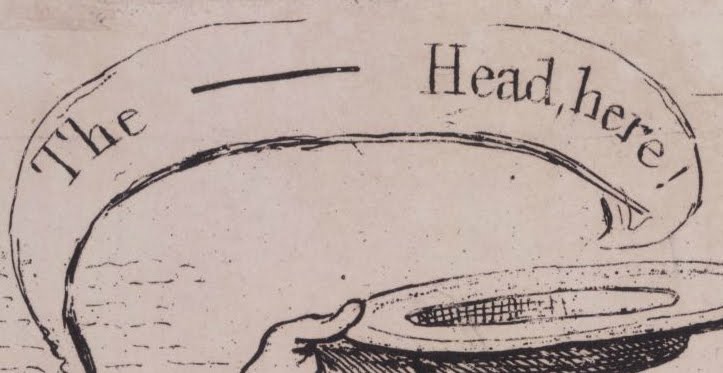
Joseph Priestley (standing) holds up a chalice and communion plate and states: "The King's* Head, here!"
Sir Cecil Wray (on our left) with a reddened face, pours himself some sherry and exclaims "Damn my eyes! but I'll pledge you that Toast tho Hell gapes for me". In the orange coat Richard B. Sheridan declares"O Heavins [sic]! why I empty a Chelsea Pensioner's small-beer barrel, in such a cause!". Charles James Fox's (centre) portly face is also reddened and as he raises his glass he says"My Soul & Body, both, upon the Toast!!!". Next to Fox is Horne Tooke who states"I have not drunk so glorious a Toast since I was Parson of Brentford, & kept it up with Balf & McQuirk!". To the right a rather drunk looking Theophilus Lindsey is saying"Amen, Amen". Behind this group are charicatured religious dissenters, from left to right saying:
"Hear our Prayers: & preserve us from Kings, & Whores of Babylon!!"
"Put enimity between us & the ungodly and bring us down the Heads of all Tyrants & usurpers quickly good Lord--Hear us"
"O, grant the wishes of these inheritance"
The frame on the back wall shows St. Paul's Cathedral, with three pigs eating from a trough, underneath it reads: 'A PIG's STYE, a View from Haskney'


* There are a couple of alterations within the above image, firstly the word 'King's' has been written into Priestley's quote, though later productions show only a dash (both above). Also, at the base of the image a word has been covered up (see below), and other prints show this incorporated. It may be that this was one of the original prints by Gillray and the alterations were made for legal reasons. All those at the dinner were adamant that no toast was made for the head of the King.


Lost Trades: The Coins of John Gregory Hancock

Angelsey Druid coin, die engraved by Hancock, struck
in Wales.

John Gregory Hancock was a die-engraver and coin manufacturer and was thought one of the finest engravers, not just in Birmingham, but world-wide. The process of die-engraving involved incising the image in reverse (including dimensionally in reverse) in metal so that a coin could be struck from it. John engraved the die for the 1792 Washington cent, which is a very skilful example of the trade (see below, left), and made print engravings for Bisset’s Magnificent Directory. John was also the first to patent the process of paper embossing in 1796 (and may have invented it)* which is the method of raising a pattern or picture on paper by pressing it between two metal dies.


A lovely example of a coin is one produced by Hancock’s son (also called John Gregory Hancock, see above right) in 1800 when he was only seven years old. It shows a bust of Shakespeare, and was probably a product of Hancock senior handing down his skills to his young son. Coins were not just produced as part of general currency, but they were used by businesses to advertise, to commemorate people or events, as special currency such as workhouse tokens, as medals and to promote political messages (as with the medal below). The process of die-engraving is complex, dark must be engraved as light; raised sections as dropped ones, which requires a great deal of technical skill.

Medal cast in 1800, die by Hancock. The medal states
'THE UNCHARITABLE MONOPOLIZER WILL STARVE THE
POOR' and around the globe is written 'TAKE NOT WHAT
WAS MADE FOR ALL'. The band on the figures head states
'POSSESSION'. 


NOTES
A Thomas Hancock was an engraver (art) working at 14 Congreve Street. He worked on Bisset's directory as well, which suggests that he could have been related to John Gregory Hancock. Thomas was the son, or another relation of renowned Worcestershire engraver Robert Hancock, who was apprenticed to Birmingham's George Anderton in 1746.
A William Hancock produced and patented the first metal rope in Birmingham which made coal mining safer as metal was less likely to break.
* References on request.

Making Improvements: The Street Commissioners

Map of 1810 drawn up by John Kempson for the Street Commissioners.
West is top. It shows the administrative boundaries drawn up.

Apologies, there is no close-up of this map yet.

As Birmingham grew over the eighteenth century the old manorial and parochial institutions became insufficient to maintain the streets and the built environment of the town. With so many inhabitants flocking from all around, buildings were popping up, sometimes with little concern for others, and the medieval streets, that had served well enough before, were now struggling to support the growing town. In 1769 and Act of Parliament was passed to appoint 50 Street Commissioners who could control how buildings were being erected, to improve lighting, to remove obstructions in roads and to widen the narrow medieval streets. Some of the main concerns were to achieve a more effective running of the markets which frequently caused congestion and for the safety of inhabitants by installing lighting. The Street Commissioners were basically an early form of planning body, controlling the way that Birmingham grew for the benefit of the residents as a whole. They Commissioners were deemed to work successfully (most of the time) and their powers were increased by a number of subsequent Acts until the Commissioners were replaced by the Corporation in 1851.*

Following is a list of the Acts that initiated and then added to the work of the Street Commissioners. Their work always centred on improving the markets. The list is not comprehensive, but gives a good outline of their duties over the 81 years of their work.

1769: 50 Street Commissioners were appointed and the first meeting was held at the Castle. To levy the rates, based on the value of inhabitants properties. To make the markets work more effectively (this involved a great deal; Hutton described the markets as "completely choked with buildings and filth). To improve lighting (700 lamps* were introduced and this was so successful that the Act became known as the Lamp Act). To acquire and demolish buildings in order to widen streets (this included houses at the junction of New St/High St, a house by St. Martin's & Upper Roundabout House). To enforce the removal of refuse from in front of properties by householders (they were later responsible for drainage and other waste disposal).*
1773: Number of Commissioners raised to 79. A room to be hired for use as an office. To be able to borrow money at a limit of £1,000. To acquire and demolish houses in Moor Street, New Street, Bull Lane, Temple Tow & Smallbrook Street and to widen New Street, Temple Row & Mount Pleasant (Ann Street). During this period the Commissioners also demolished the Old Cross (1784).*
1801: Number of Commissioners raised to 121. A Public Office and prison to be built (eventually built on Moor Street in 1807). To be able to borrow money at a limit of £5,000. To acquire and demolish the Welsh Cross, houses and shops in Bull Street, Swan Alley, Worcester Street, Moor Street, around St. Martin's and in Bull Ring, including the Shambles (butcher's shops). To control the levels of new streets, to number houses more effectively and to erect street signs. To issue licenses and regulate hackney carriages and sedans.*
1812: Number of Commissioners raised to 220. To be able to borrow money at a limit of £24,000.  To repair and maintain the streets, including responsibility for drainage. Gas lighting was introduced during this period (1818). To move the pig and horse markets from Worcester St/Peck Lane to New Street as well as relocating the beast and hay markets (in 1817 markets moved to Smithfield market, opened 29th May, the day of the Whitsun Fair).*
1828: Number of Commissioners raised to 308, which included the Justices of the Peace. The Public Office to be enlarged. To be able to borrow money at a limit of £100,000. To acquire and demolish buildings (300 buildings in 34 streets were demolished). To build a Town Hall (initiated in 1825) and raise funds for it through a special rate.*

The Commissioners were often local notable and wealthy gentlemen, and they chose replacements for vacancies among themselves. William Hutton noted that in his time (written 1795) the Commissioners were sometimes 'irresolute', it being difficult 'to find five men of one mind', and weren't always enthusiastic to attend meetings and get to business.* Hutton also described how Birmingham was 'overgrown with encroaching weeds' which the commissioners seemed to decide was too 'arduous work'.* As well as the body of Commissioners a few staff were hired, for example, treasurers, clerks, rate collectors, scavengers (refuse collectors), surveyors, inspectors of nuisances, market toll collectors and lamp lighters, but sometimes a single individual would cover many roles.*
By 1810 (see map above) the markets were well on the way to becoming clear open spaces; some streets disappeared at this time, like Cock or Well Street and Corn Cheaping.

* References on request
RESOURCES
 Minutes from a meeting of the Street Commissioners, 7th May 1777, plus excerpts from 1777 and 1778.

Town Hall, Guildhall and Joseph Hansom


The Town Hall in 1834

Joseph Hansom, with his partner Edward Welch, won the competition to build the Town Hall out of 67 applicants in 1831. The hall is one of the most iconic of Birmingham's buildings and its history has been traced by a number of writers. Those who have read any history of Birmingham will probably be aware of how Hansom had grossly underestimated the costs of building, and that as he had borne the entirety of the financial commitments, he was declared bankrupt before completion (and the hall had to be completed by Charles Edge). In the early 1830s though, Birmingham was teeming with political radicalism, and Joseph Hansom, influenced by Robert Owen's ideas, was part of the wider socialist movement. We do not know whether the Town Hall was built by builders in co-operatives, there were a large number of builders working on the building, but with Hansom behind the project it would have been built with the aspirations of socialism, which marks it as an important building.

Although he went bankrupt, the Town Hall was not the last of Joseph Hansom’s Birmingham commissions; in 1833 work began on the Operative Builder’s Guildhall. The Guildhall was initiated by Birmingham’s Builder’s Trades’ Union (the Operative Builder’s Union) who wanted a building for meetings, lectures and for education.* The idea was that the builders themselves would erect buildings as co-operatives without the need for the masters. Hansom, being a socialist, was a keen advocator of co-operatives. The objective of the builders trade unions was ‘to give permanency and efficiency to the efforts of the working builders to obtain secure sufficient wages and full employment for every member of their body’ and also 'to provide [...] schools for instruction in all the branches of the art of building' as well as 'a good, sound, and practical education for their children’.* There was also the desire to offer 'provision for times of illness or accident, and a comfortable retirement for the aged and infirm'.* The larger businesses and employers saw the Operative Builder’s Union as 'a direct threat to private property and capitalist enterprise', and initiated a counter-attack on those workers involved by refusing to employ them.*

The day the first stone of the Guildhall was laid there was a procession; 'bands of music, flags, banners, &c., were seen moving in all directions towards the scene of action. After parading the principal streets, amidst throngs of spectators, [...] the procession proceeded to the site of the intended building in Broad Street'.* The building was seen as part of 'the commencement of a new era in the condition of the whole of the working classes in the world'.* The excitement and optimism would be short lived though. The aim had been to raise the funds for the Guildhall from donations from the Builder’s Trades’ Unions but they suffered from organisational weaknesses and funds that were earmarked for the building of the Guildhall were used to support strikers in other towns.* In 1834 the union collapsed as did the plans for the Guildhall, which was only ever half built, but the ideas and operatives were mainly absorbed into the wider radical movements of the time.*

NOTES
** With thanks to Alex Lawrey who first let me know of this aspect of the Town Hall's construction. You can visit his site: http://www.builtheritageresearch.org/
* References available on request.