Showing posts with label Poverty and Poor Housing. Show all posts

Victorian Photo Album: Looking Through Windows - Ornaments & Things Inside (Part Four)


The last Looking Through Windows (here, here & here) posts explored 'Greenery in the "Slums"'; and showed that despite these houses being termed 'slums' by officials, the people living them adorned and beautified their homes in multiple ways. 

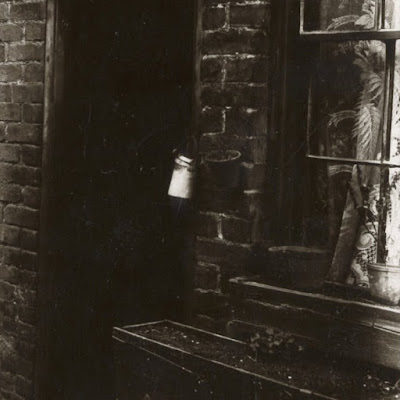
With a desire to knock down these houses, the photographers took pictures of buildings with cracks in the walls and broken windows, but didn't always notice the little things, the things which can be found by zooming into the old Victorian photographs. 

The previous posts looked at plants and flowers, this one looks at ornaments on window ledges and outside, and other things which can be peeped at by zooming in.  

This Looking Through Windows explores the things that people owned which can be seen in the shadows inside the homes (some door peeking as well as window peeking was necessary). See the images below.....

Victorian Photo Album: Looking Through Windows - Greenery in the "Slums" (Part Three)

Part three (of three parts) of Looking Through Windows (Greenery). See part one, here and part two, here. Please contact to use these cropped images in this way - mappingbirmingham@gmail.com

During the late Victorian period many of central Birmingham's poorer housing was earmarked for demolition in a drive to revamp the city centre and move those living in these houses out to newer homes in the outer parts of the town. Hundreds of photographs of 'slum housing' (Victorian terminology, not mine) were taken of the many courts of back to back housing in the town. These images were taken was to assert the reasoning for their demolition, that they were run down, so they "frame" the buildings to tell this story. This is only one story, though, as these buildings were filled with families living their lives and beautifying their homes, and if you zoom into the images you can find traces of this

Click on the images, below, to view in a lightbox.

Victorian Photo Album: Looking Through Windows - Greenery in the "Slums" (Part Two)


Part two (of three parts) of Looking Through Windows (Greenery). See part one, here. Please contact to use these cropped images in this way - mappingbirmingham@gmail.com

During the late Victorian period many of central Birmingham's poorer housing was earmarked for demolition in a drive to revamp the city centre and move those living in these houses out to newer homes in the outer parts of the town. Hundreds of photographs of 'slum housing' (Victorian terminology, not mine) were taken of the many courts of back to back housing in the town. These images were taken was to assert the reasoning for their demolition, that they were run down, so they "frame" the buildings to tell this story. This is only one story, though, as these buildings were filled with families living their lives and beautifying their homes, and if you zoom into the images you can find traces of this

Click on the images, below, to view in a lightbox.

Victorian Photo Album: Looking Through Windows - Greenery in the "Slums" (Part One)

Original full photograph of 'slum housing',
back of 52 & 54 Midland Street, late 1800s.

During the late Victorian period many of central Birmingham's poorer housing was earmarked for demolition in a drive to revamp the city centre and move those living in these houses out to newer homes in the outer parts of the town. Hundreds of photographs of 'slum housing' were taken of the many courts of back to back housing in the town. These images were taken was to assert the reasoning for their demolition, that they were run down, so they "frame" the buildings to tell this story. This is only one story, though, as these buildings were filled with families living their lives and beautifying their homes, and if you zoom into the images you can find traces of this

Below is part one (of three parts) of Looking Through Windows (Greenery). Please contact to use these cropped images in this way - mappingbirmingham@gmail.com

Click on the images, below, to view in a lightbox.

Georgian Terraces: Summer Lane and Another Grand Townhouse

381 Summer Lane (to the right) at the junction with Hospital Street.
Taken 14 August 1932. Held at Birmingham Archive.

A photograph of a fine Georgian townhouse at 381 Summer Lane, at the junction of Hospital Street, which goes into the distance on the left. 

Tour of Lost Birmingham Nᵒ.43: Life Back to Back (an Ann Street court)

Court 6, Ann Street (later Colmore Row), 1860s.

This is one of many of courts of back-to-back housing which existed in Birmingham, and were photographed during the Victorian period. This is court 6, Ann Street, which was just opposite the Town Hall, the roof of that building just visible near the chimney stacks to the right. The church in the background on the left is the now demolished Christ ChurchAt the time the image was taken, in the 1860s, the area was being prepared for demolition for the new Council House (which still stands on Victoria Square); the rubble in the foreground had previously been other housing.

Children in the Work Place


Birmingham Buttons

HAMMOND, TURNER & SONS
Disposition of John Turner, sworn to before Leonard Horner and John Spencer, Esquires, 1st May 1833.
Will you state the trade in which you are engaged? —Button manufacture.
Have you any mechanical moving power? —No steam-engine or water-wheels.
What number of workmen do you employ on your premises? —From one hundred and thirty to one hundred and fifty. We employ besides about three hundred and fifty out-workers; either working for us entirely or partially.
Will you state what number of children in the manufactory under fourteen years of age?—From twenty-five to thirty.
What is the earliest age? —I think nine.
What are the hours of work? —From seven till seven, with two hours for meals.
Do you leave off sooner on a Saturday? —We pay our wages on Friday, and have done so for many years. The work-people generally leave a little earlier on a Saturday.
What is your impression of the state of education of the children, in your employment? —They generally can read, and frequently write, and they in general attend Sunday-schools.
Have you any work in the night? —No.
Is there anything in the nature of your work calculated to injure the health of the children? —None, nor other persons, except gilding, and that under the improved system with little inconvenience.
In the course of your long experience, would you say that the health of the children in your employ was generally good? —Yes.
What is your impression of the moral character of the children, male and female, in your employ? —Good; it has been my invariable practice to attend to the morals of the people in our employ, discountenancing vice by every means in my power.
Are you acquainted with the nature of the dwellings of your work-people, both as to healthiness as well as comfort? —These are in exact proportion to the moral conduct of the parties. Where they are religious, they are clean; where they are drunken, dirty.
From your local knowledge of Birmingham, do you consider that the work-people live in health and comfort? —Yes; arising from the general custom, of each family having a separate house and access to good pump-water.
Has this proposed Ten Hours Labour Bill excited any attention among manufacturers or workmen, with reference to the town of Birmingham? —None whatever, as being inapplicable to the place.
Have you ever heard of a factory of any description in Birmingham where it is alleged that the children employed are over worked? —Never.
Do you believe the operatives are generally well off at present, taking into account the rate of wages, and the prices of the necessaries of life? —I have known them many times during the last forty years much worse off than at present, and I believe that a part of the proportion of the present distress arises from their improvidence.
Does the distress to which you allude extend generally to all classes of trades in Birmingham? —I think not.
Have you ever known in the course of your experience Birmingham without distress existing among some descriptions of employment? —Uninterrupted prosperity must have been very partial, and of short duration.

The Meanings of Charity: Blue Coat School

The Blue Coat School and the railed graveyard of St. Philip's, circa 1845.
The school had originally been built in 1724, but altered and enlarged
by John Rawstorne between 1792 and 1794.

The Blue Coat school was founded by the Rector of St. Philip's church at the time; the Reverend William Higgs. In 1722 it was decided to open an establishment for the education of poor children due to the 'profaneness and debauchery [...] greatly owing to a gross ignorance of the Christian religion, especially among the poorer sort; and that nothing is more likely to promote the practice of Christianity than an early and pious education of youth'.* The school, as well as giving religious guidance, would teach the children reading and writing, arithmetic, geography, science, needlework, and housework, some of these were gendered. It opened in the July of 1724 and took on 22 boys and 10 girls to be 'clothed, maintained and educated', and another 10 of each sex to be clothed and educated only, but the latter method was short-lived.***

The children remained at the school full time, being allowed to visit their parents five times in the year, varying from a couple of days to a couple of weeks; at Mid-Lent, Christmas, Easter, Whitsuntide and for the Michaelmas Fair. On Sundays though, apart from one at Mid-Lent, the children were always to be at school so as to attend church. Parents were not allowed to see their children apart from in these holidays, as in September 1760 it was decreed that 'no child after they are admitted into the Charity School shall be suffered to speak to their parents or next friends',** and parents had no say in the treatment of the children. Punishments for the severest disobedience could be a week's imprisonment or being 'severely whipt, stript and expelled from the school'.** These were, of course, harsh and sometimes humiliating, but acceptable punishments for the time.

In 1831 those involved in the school looked back at how the establishment had been 'an asylum for [the children] in those years which most require superintendence and protection, a careful discipline in their minds in a system of virtuous and obedient habits, and daily instruction in the principals and duties of the religion of the Church of England'.* Once education was complete at fourteen, the children were placed in apprenticeships, the boys with manufacturers as so to learn 'some useful trade', and the girls as domestic servants. With regards to the girls education, they were trained in all manner of domestic duties throughout their school life, which included making the boys beds and sweeping and mopping the boys rooms, and even after this changed in 1815, the girls still received a lesser academic education.** The children were basically handed over by their parents 'to the sole management of the subscribers [...] and the disposal of him (or her) to such masters or mistresses';* if the parent(s) wanted their children back or did not wish their child to be sent into the roles that were laid out for them they had to pay £10, which for the very poorest could be six months wages.* So this was not wholly an education that was meant to serve the children in their chosen paths in life, but generally to serve those that gave money to the charity (by subscription), by producing obedient and well mannered servants.

Those that subscribed to the school were often those who received apprentices, such as Matthew Boulton, who was a subscriber, and was treasurer at one point, and who received a number of apprentices including a George Craven in 1766. The school did not abandon their children when they were sent out as apprentices though, if they had a complaint about how their master or mistress was treating them they could ask the school for assistance. The school would often threaten legal action if the claims seemed to be founded, though most employers would promise to amend their ways and the charges would be dropped. They took this part of their role in the children's lives after they left the school very seriously.

The charity of the Blue Coat School was of a very different kind to charity as we understand it today; it was money for something, that something being, hopefully, an obedient and diligent apprentice or servant. Many of the children, though, would have had a better quality of life than if they had not attended the school, and many showed their gratitude. A group of former pupils came together and formed the Grateful Society (which later became the True Blue Society) and helped to raise money for the school. Many former pupils did well in business too, and, after subscribing to the charity, took on apprentices in their turn.** Children tried to run away as well though, and there are several instances of runaways being fetched back to the school; once returned punishment would be severe and three such boys were not only lashed, they were made to lash each other.** Although of benefit to many of the children attending, the school was a subtle form of ownership, parents literally handed over their children, perhaps in the hope of a better life for them, but for many parents the relief of the burden of feeding and clothing one of probably several children would have been a strong driving force.

ALSO SEE: The Blue Coat Children

NOTES
* References on request
** John D. Myhill, Blue Coat: A History of the Blue Coat School, Birmingham, 1722-1990. Meridian Books, 1991.
*** In 1829 the school educated 181 boys and 72 girls.*
There was actually, a small group of nineteen children who wore green uniforms, these children were supported by donations from Fentham's Charity.

Tour of Lost Birmingham Nᵒ.37: The Opportunities of Industry - Corbett's Temperance Hotel (Paradise Street & Hill Street)

Corbett's Temperance Hotel in about the 1870s, it had opened in 1842.
The building dated from about 1750. The street leading down is Hill Street.

In October 1842 Joseph Corbett (1791-1868) opened his boarding and coffee house on Paradise Street.* This was a fine part of town, just opposite the newly opened Town Hall, so presumptions could easily be made that Joseph was a middle class man in business and always had been, but this could not be further from the truth. Joseph was about 50 years old when he, and his wife, started up the hotel on Paradise Street, and Joseph had taken all the opportunities that the industrial town of Birmingham offered, working his way up from poverty.

Joseph wrote about the ‘frightful poverty’, the ‘cold and hunger, and the innumerable sufferings’ of his childhood.* His father had been a drunk, so his mother had financially supported her family of eleven children by working long hours in the manufactories, and ‘one and all of [the children were] forced out to work so young that [their] feeble earnings would produce only 1 [shilling] a week’.* The young Joseph had been sent out as an errand boy at the button makers Hammond, Turner & Sons** where his parents worked when he was about seven years old, and had worked at that same company as a button burnisher (polisher) until he left to start up the hotel.* Joseph had some attributes that would have aided his rise through society, mainly his ability to read and write exceptionally well (his father could write, but not his mother), and a marriage to Ann Willington who seems to have come from a lower middle-class family, and who would have had some good connections.* His writing ability was found unusual; Hammond, Turner & Sons** was approached by the Commission on Child Labour in 1840 and Joseph produced a 1,500 word document describing his own experiences and thoughts on the matter of child labour, and with a sense of surprise the commission noted that ‘[t]his most creditable statement, the product of a Birmingham mechanic, is inserted without a single alteration of any kind’. The word ‘mechanic’ is used at the time to describe members of the working classes, and the commission felt the need to note that the excellent quality of Joseph’s statement was all his own work.

By 1840 Joseph was earning a good wage, between 30 and 35 shillings a week, but to be able to open a boarding house two years later he must have still been frugal with his wages. He didn’t agree with wives with children working the ten hour days in the manufactories, so it is unlikely that his wife had worked in their early marriage, but she did run a business making and selling straw bonnets from the late 1830s, which would have helped their financial position. Neither did Joseph drink; he became a member of the Birmingham Temperance Society and District Union (BTSDU) which had been initiated in 1830, and by 1843 he was sitting on the committee with some of Birmingham's most notable inhabitants. So it seems that by sheer hard work, being employed by a fair employer, by having the ability to read and write better than most in his situation, by marrying well for his position and by being careful with wages, Joseph managed to work his way out of the poverty that he was born into.

Joseph never turned away from his roots though, and also, never seems to have been allowed to. In the year he died, 1868, John Alfred Langford called him ‘an ornament to his class’, and the reason that Langford felt moved to write a long obituary about Joseph Corbett in his new book was because of all the good work that he had done in Birmingham from the early 1830s.* Joseph had become good friends with Thomas Attwood (whose statue is in Centenary Square), and was one of only two working class members of the Birmingham Political Union fighting for, among other things, universal suffrage;* Joseph himself received the vote for the first time in 1838, a right that he had personally battled for.* He fought against slavery, corresponding with the well known anti-slavery campaigner Joseph Sturge, and also worked as a guardian and overseer of the poor from about 1842, working for better conditions for the poor and to improve the conduct of the overseers.* His own experiences had ‘kept alive a deep anxiety for the emancipation of thousands of families in this great town (Birmingham) and neighbourhood, who [were] in a similar state of horrible misery’.* As well as this he was chairman of a committee in 1846 which was attempting to end the imprisonment of debtors, as, even though the Birmingham Court of Requests*** had been closed two years previously, other courts had jurisdiction in Birmingham; he wished to stop the ‘injustice, oppression and cruelty inflicted upon the Working and Humbler Classes of Society’ by these courts.*

Although some of Joseph’s opinions on women may seem a little distasteful today, mainly the idea that women with children should always look after them at home, and that the education of women in household duties was neglected, we must take them in context of the times. There were no childcare facilities, so children had to be looked after at home by someone, and it was not socially conceivable that a man could perform that role. Also, men’s wages were usually higher. Joseph formed these opinions through his own personal experience; his own mother, so Joseph described, had ‘worked in a manufactory from a very early age’.
'She was clever and industrious, and [...] was regarded as an excellent match for a working man. She was married early [and] became the mother of eleven children: I am the eldest. [...] She had children apace. As she recovered from her lying-in, so she went to work, the babe being brought to her at stated times to receive nourishment. As the family increased, so everything like comfort disappeared altogether. The power to make a home cheerful and comfortable was never given to her. [...] She made many efforts to obstain [sic] from shop work; but her pecuniary necessities forced her back into the shop. [...] I have known her, after the close of a hard day's work, sit up nearly all night for several nights together washing and mending clothes’.*


Joseph’s involvement in the temperance movement can also be attributed to his childhood, he makes it very clear that his father was a drunkard and spent his time at the tavern rather than looking after his family.* The temperance movement had come from America and advocated moderation and abstinence from alcohol, and promoted the opening of alternative venues for socialising and relaxation other than public houses, such as Joseph Corbett’s own coffee house. The opening of temperance hotels followed in a similar vein, allowing travellers the option of places to stay that did not include a ready supply of strong liquor. But Joseph, unlike others, did not just want the closing down of the ale-houses, he wanted other leisure pursuits to replace drinking, such as ‘gymnastic exercises, quoits, cricket, &c,; public gardens, walks, baths, reading rooms, &c’.* Joseph’s temperance hotel was one of only around half a dozen in Birmingham, so was an important aspect of the Birmingham temperance scene. Corbett’s Temperance Hotel, then, was just another part of Joseph’s attempt to do some good, and once he had it, he also used the building in other beneficial ways, as many charitable institutions held their meetings at Corbett’s Hotel (see below).*


With all this charitable work, much of the running of the hotel was probably left in the hands of Joseph’s wife, Ann. He may have had strong opinions about the role of women in the upbringing of young children, but Ann, and the couple's daughter and several of the couple’s granddaughters worked in a number of strong roles throughout their lives. The couple’s granddaughter had helped them in the hotel since the age of about sixteen, and continued running it after Ann’s retirement even though she herself was married and had a young child. Other granddaughters were musicians or worked in their own right, and were recorded on the census as such, which was unusual for the time. This suggests that Joseph was possibly an open minded man of his time.

With all that Joseph Corbett achieved in his lifetime it seems strange that he is not remembered, but his position in society would be the likely cause of that. Despite all the work he did, his lack of large amounts of disposable income (there is nothing quite like putting a hundred pounds towards the building of a school that will get your name on a plaque), and his impoverished roots would not have advocated him to be immortalised, like Thomas Attwood, Joseph Sturge or the Cadbury’s, all of which Joseph had connections with. He is, I suppose, a bit of a 'working class hero', working quietly in the background to do what he thought was right and to improve the lives of the poor, of which he knew all too well what they endured. Hopefully this post gives him a little of the recogition that he deserves.    

--------------------------------
NOTES
I would really appreciate any more information on Joseph Corbett or other interesting Brummies.
* References on request
** To find out more about the button makers Hammond, Turner & Sons visit: http://hammond-turner.com/
*** I have written a number of posts on the conditions of the Court of Requests, see them here.
The image is courtesey of Birmingham Library and Archive Services.

Newspaper Clippings: The Loathsome Cellar

The final of seven images in A Rakes Progress, when Tom (left) is
incarcerated in a London debtor's prison. By William Hogarth. The debtor's
prison was a common punishment for those unable to pay their debts. 


From ARIS'S BIRMINGHAM GAZETTE, 15 January 1844

By the 1840s there was strong critisism concerning the poor conditions of the debtor's prison which was articulated in a number of letters published in Aris's Birmingham Gazette, following are two printed in 1844. One of the main concerns was that the jailors and other prison workers were not paid, so earnt their living by charging the inmates for their food and other basic needs. This had been an issue discussed since the late eighteenth century but was by this time becoming less easy to ignore. The feelings of these anonymous letter writers are communicated through some of the terms they use, such as 'the loathsome cellar', 'the great evils of [the] court', and 'the miserable debtors'. Later the same year the debtors prison was shut down, the public feeling towards the establishment probably having some sway in the closure. It was not till the 1860s that the practice of imprisoning debtors was made illegal.

To find out more about the debtor's prison in Birmingham, and the Court of Requests that housed it, click here to see all previous posts.

Tour of Lost Birmingham Nᵒ.25: Depriving Many a Poor Creature of Liberty (High Street)

Door of the Debtor's Prison, from the exhibition
Birmingham: it's people, it's history at BMAG.  

Visit the now demolished Debtor's Prison and the building that housed it, here. Find out about the Birmingham History Galleries which display this piece, here.

The plaque at the top of the door states "THIS DEBTORS PRISON DOOR STOOD IN HIGH STREET, BIRMINGHAM, DEPRIVING MANY A POOR CREATURE OF LIBERTY. NOTE THE BARS THRO WHICH CHARITABLE PASSERS-BY DROPPED COINS TO THE INMATES". Unlike the main prison, there was alot more sympathy towards the inmates in the debtor's prison, as many in business could be at risk of ending up there if their business dealings did not go well. The Debtor's Prison was tucked down an alley on Birmingham's High Street, inside the Court of Requests building.

Tour of Lost Birmingham Nᵒ.21: Medicines for the Poor - The Dispensary (Temple Row)

The dispensary on Temple Row (far right), next to Styles's Hotel, c. 1800.
The building had originally been a dwelling house built in around 1720,
reputedly by William Westley.

When writing the previous post about the Hotel on Temple Row, I noticed in the picture used (included above also) that one of the houses near the Hotel was being used as Birmingham’s dispensary. I had conducted some research into the dispensary on Union Street (built 1806-08), as it was designed by William Hollins, and although I knew it had earlier beginnings I had not looked into where those beginnings lay. Finding it in the image spurred me to have a look at the history of the dispensary. There is more than one way to look at an image, which is why this post includes that same image. The last post explored the opulent and exclusive hotel, its post-chaises and assemblies with the image being used to represent that world, yet in about the same year (c. 1800) there was an outbreak of typhus which particularly affected the poor who were suffering due to deficient harvests. Dr. Bree was physician at the dispensary that year and helped to administer remedies to those suffering (explored below), and many of those would have come to Temple Row’s dispensary looking for help for themselves or their family. This forms a stark contrast that is not instantly visible in an image, and was not meant to be captured by the artist.
----------
In 1792 an idea began to grow among a few of Birmingham’s inhabitants to begin a dispensary based on those begun in London and that had been popping up in other provincial towns. The dispensaries dealt with lighter medical cases providing a service for the poor distributing medicines, offering medical assistance, inoculations and midwifery services. In William Hutton’s words, the aim of the dispensary was;
“[t]o supply the industrious of the labouring classes, who are not able to pay a surgeon for his services, with medical and surgical relief, for the payment of a trifling subscription. It also affords, by the contribution of the opulent and benevolent, relief to those who are unable to contribute any sum themselves.”*
The first dispensary opened in 1793 in the building on Temple Row; in the first year of its life 325 patients were treated (246 sick patients, 48 midwifery patients and 31 inoculations).*

Dispensaries became popular as they provided a more basic service which supported the work of hospitals (like Birmingham’s own hospital on Summer Lane). They also came about at a time when there were growing concerns about the distribution of wealth marked by the success of many industrialists,* and the continuing poverty of those who turned the industrial cogs from the very bottom. It is worth noting that Birmingham had struggled for many, many years to open its hospital due to lack of funds coming in from the town’s wealthier inhabitants, much to the shame of some. The dispensary’s success probably came due to the early involvement of Matthew Boulton (in 1793), the wealthy proprietor of the Soho manufactory, who stated that ‘if the funds of the institution are not sufficient for its support, I will make up the deficiency’.*

Institutions like dispensaries were part of a surge of philanthropic endeavours of the time but, as Roy Porter also states, they also acted as a kind of ‘social balm’.* The assistance of institutions like dispensaries covers up the fact that the poor needed charity because their wages were too low to pay for their own health care, or to maintain a lifestyle that would engender better health. An instance of this can be seen during the national outbreak of typhus in 1799 and 1800, which affected Birmingham badly and was attended to by the then physician of the dispensary, Dr. Robert Bree. Bree states that provisions in those years were scarce and dear, due to bad seasons, and that there was want for employment; he states that’ [m]any families had subsisted on barley and potatoes, in scanty portions, for many months, frequently without even a pound of butcher's meat for their Sunday's dinner. I have seen not unfrequently beans boiled with salt and water in a soup, that served for food during several days'.* He noted that it was the poor that suffered the most greatly from the fever in those years due mainly to this lack of nourishment (you can see Dr. Bree’s remedies for the typhus below).

Dispensaries were predominantly an urban phenomenon, supporting the large populations of towns, but these greater populations also helped to develop medical knowledge as a single physician could view several instances of the same disorder. The variety and scope of experience that could be gained in the towns often attracted young physicians, and in 1805 it was stated that ‘Birmingham had, for a long period, been considered by the surrounding country as the seat of superior medical experience and authority’.* Case books though, were rarely kept (very few case descriptions survive for Birmingham) so it is difficult to gain insight into the kinds of ailments ministered to and treatments given, though physicians did sometimes record their findings in medical journals so as to expand medical knowledge.

The general interior layout of dispensaries was to have the dispensing department (where the drugs would be arranged, usually on shelves on the wall), waiting rooms, consulting rooms and private examination rooms on the ground floor, and then the committee rooms, the medical officers’ rooms and the housekeepers' rooms on the floor(s) above. It was probably not till the custom built dispensary was erected on Union Street that the accommodation was to this standard. The Union Street dispensary (which I will explore further in a future post) opened in 1808 and moved from Temple Row to that premises; and there the dispensary housed an apothecary, someone to compound and dispense medicines and a house midwife, as well as physicians (see notes below) and surgeons attending.

NOTES
* References on request.
DR. BREE'S REMEDIES FOR TYPHUS
Dr. Bree took much worth in Dr. James Currie’s treatment of typhus with aspersions (showers or sprays) of cold and tepid water, which he thought much more beneficial than the usual treatments of bark and stimulant cordials. He did give treatments of cordials as well though, and describes the recipe he used. 'Take oak bark bruised, and roughly powdered; horse radish roots sliced; of each, an ounce. Boil the oak bark in two pints of water, till one pint be consumed. Add, before the boiling is finished, the horse radish. Then cover the vessel till the decoction is cold, and strain it for use. Sometimes elixir of vitriol was added to this, and if purging was threatened, or general uneasiness was felt, thirty drops of tincture of opium were added to each pint. Two ounces were given every four or five hours'. Together with 'the aid of aspersion of water’ Dr. Bree claimed much success in the survival rates of his patients.
PHYSICIANS AT THE DISPENSARY
(if you can add to or alter this list, please add the details to ‘comments’ or email me)
At Temple Row1796-c. 1800: Dr. John Butt SALT recommended by Erasmus Darwin (see letter of recommendation here), retired due to ill health.
c. 1799-c. 1805: Dr. Robert BREE
1802-1804: Dr. ROGERS (died of scarlet fever contracted from a patient in 1804).
1805: Dr. MALE
At Union Street
c. 1814-1821: Dr. John BOOTH (and the Birmingham Infirmary)
1822-1833: Dr. John DARWALL (Detailed information on Darwall here.)
Oct 1835-?: Dr. Thomas Ogier WARD (previously at Wolverhampton dispensary and studied the cholera there in 1832).

The Employment of Children in the Button Trade: Statement from Joseph Corbett

Taken from the ‘Commission on Child Labour’ of 1841, looking at the employment of children in the button trade. Folios 129 to 133. Evidence collected by RD Grainger Esq. from Hammond, Turner & Sons at their Snow Hill manufactory. These folios contain a number of statements, all of which can be seen here, reproduced in this post is the statement from Joseph Corbett.

Mr. Joseph Corbett
Has been employed more than 40 years at Messrs Turner’s as a button burnisher. The average wages in this trade, in full work, are from 30s. to 35s. a week, but there is often a want of employment. Has often been consulted by the mechanics generally on occasions when they required advice. Has been applied to by mechanics in reference to the objects of this inquiry. Has taken an active part in public proceedings connected with the trade of the town. Was one of a deputation consisting of two from the button-makers appointed to wait on His late Majesty George IV., and other branches of the royal family, nobility, &c., in order to induce them to encourage the trade. On this occasion received several votes of thanks from the masters and men. In 1837 was again appointed a deputy to wait on Viscount Melbourne relative to the distressed state of the nation.
The witness handed in the statement marked [G.]

[G] Statement of Mr. Joseph Corbett
1. Children of both sexes are sent to work at too tender an age, particularly female children. During their childhood, at a time when fresh air and freedom from confinement are so essential, they toil throughout the day, acquiring not the least domestic instruction to fit them for wives and mothers. I will name one instance, and this applies to the general condition of females doomed to, and brought up amongst, shop-work.
My mother worked in a manufactory from a very early age. She was clever and industrious; and, moreover, she had the reputation of being Virtuous. She was regarded as an excellent match for a working man. She was married early. She became the mother of 11 children. I am the eldest. To the best of her ability she performed the important duties of a wife and mother. She was lamentably deficient in domestic knowledge; in that most important of all human instruction, how to make the home and the fire-side to possess a charm for her husband and children, she had never received one single lesson.
She had children apace. As she recovered from her lying-in, so she went to work, the babe being brought to her at stated times to receive nourishment. As the family increased, so anything like comfort disappeared altogether.
Poor thing, the power to make home cheerful and comfortable was never given to her. She knew not the value of cherishing in my father’s mind a love of domestic objects. My heart aches when I reflect upon her anxious and laborious situation.
Not one moment’s happiness did I ever see under my father’s roof. All this dismal state of things I can distinctly trace to the entire and perfect absence of all training and instruction to my mother. He became intemperate; and his intemperance made her necessitous. She made many efforts to abstain from shop-work; but her pecuniary necessities forced her back into the shop. The family was large, and every moment was required at home.
I have known her, after the close of a hard day’s work, sit up nearly all night for several nights together washing and mending of clothes. My father could have no comfort here. These domestic obligations, which in a well regulated house, (even in that of a working man, where, there are prudence and good management,) would be done so as not to annoy the husband; to my father they were a source of annoyance; and he from an ignorant and mistaken notion sought comfort in an alehouse.
My mother’s ignorance of household duties; my father’s consequent irritability and intemperance; the frightful poverty; the constant quarrelling, the pernicious example to my brothers and sisters; the bad effect upon the future conduct of my brothers; one and all of us being forced out to work, so young, that our feeble earnings would produce only 1s. a week; cold and hunger, and the innumerable sufferings of my childhood, crowd upon my mind and overpower me. They keep alive a deep anxiety for the emancipation of the thousands of families in this great town and neighbourhood, who are in a similar state of horrible misery. My own experience tells me that the instruction of the female in the work of a house, in teaching them to produce cheerfulness and comfort at the fire-side, would prevent a great amount of misery and crime. There would be fewer drunken husbands and disobedient children. As a working man, within my own observation female education is disgracefully neglected. I attach more importance to it than to anything else. They impart the first impression to the young susceptible mind; they model the child from which is formed the future man.

2. As regards males and females promiscuously together in one manufactory, I do consider it as having a most immoral tendency. I have always found, where the intercourse was promiscuous, the females to be careless in their dress, indecent in their conversation, unchaste in their conduct; in fact, they are inferior in all respects to those who are kept apart from the male sex. Look at the young women employed the higher department of the manufactory, the warehouse for instance, under the superintending care of a master of sober and moral character. Here will be neatness of dress, decent and becoming conversation, and attention to business. Intellectual education, whether from a Sunday school or other sources, produces a marked distinction of improvement. It is not difficult to imagine a young female, of pleasing face and person, exposed, by being placed in a manufactory, to the lewd remarks and familiarities of the coarse and dissipated of the other sex. Perhaps not one idea of virtue was ever established in the mind of this susceptible and credulous creature. She is now put in the certain path to ruin and seduction. She is often treated as an inferior being; until some infamous seducer flatters to obtain her ruin. She is the victim of her own confiding and unsuspecting nature, but she is branded for being extremely vicious.
Suppose the weekly earnings of a female to be 6s, and this is above the average, out of this she has to pay for lodgings, for clothes, and for the making of them too, for she cannot make them herself never having been taught; her washing after work-hours, she will do herself; in her outlay she most be frugal to keep clear of the inconveniences of debt.
There can be little or no saving in this instance. Suppose the poor creature to be put to half time, or to be thrown out of work all together, she has no parents, no friends to fall back upon, resources she can have none; what then is the alternative?
The answer is obvious.

3. With respect to “turn outs,” much bad feeling is oftentimes created by the unwillingness of a principal to listen to the complaints of their work-people; to talk over kindly; and with a good feeling, their mutual differences. By this means misunderstandings would be made clear; concessions made; unjust and unfounded suspicions on both sides prevented; and the painful suffering to families, and loss of property to the masters need not take place.
It is a fact that in my trade, at our place, no “turn out” ever took place; and yet our list of prices is a standard for the town; my shopmates were all well informed, and still more my employer was open at all times to easy access. He never refused to listen to the most trifling complaint. The manager also was a man of an amiable disposition.
His mediations were just and satisfactory to both parties. I remember with pleasure the testimony of a silver snuff-box being presented to him for his honourable and conciliatory conduct.—(Inscription: “Presented to Mr. Joseph Conway, as a tribute of respect, by a few friends in the employ of Messrs. Hammond, Turner, and Son, May the 7th, 1828.”)
The only instance of anything like disaffection took place at our manufactory in the beginning of 1838. It had no reference to prices. It was concerning privileges. A wrong notion prevailed. The best informed were open to conviction, and kept to their work; the others, 4 of them, who were extremely ignorant, left their work, but soon afterwards repented of their precipitate and short-sighted conduct.

4. I have seen the entire ruin of many families from the waste of money and bad conduct of fathers and sons seeking amusement and pastime in an ale-house. From no other single cause alone does half so much demoralization and misery proceed.
Here I am forced back to the painful scenes of my childhood. Thousand and millions resort to the ale-house for conversation and amusement; and it would be anything but paternal on the part of Government to break up, or attempt to break up these places, without furnishing them with other recreative resources, as for instance, gymnastic exercises, quoits, cricket, &c.; public gardens, walks, baths, reading-rooms; &c.
Having worked in a manufactory 40 years, the effects of ignorance amongst the working people have been the cause of much uneasiness to myself.
The better a man was educated the better workman he made; and more civil and obliging to his employers, and the more respected and valued by them. I speak from the experience and observation of many years. Instruction and kindness towards the working classes has an elevating tendency. Women’s minds are often debased by the coarse and brutal conduct and conversation of their masters. The one mode of treatment creates better servants, and therefore better domestic characters; the other produces viciousness and brutality of feeling.
If the rich knew how much they could accomplish by condescension and example they would not be so scanty of kindness to the poor.
As a proof what kindness may produce, I will speak of my own place of work.
An aunt was employed upwards of 70 years; my mother 30 years; my father 30 years; myself upwards of 40 years; a son, who works under me, is now within a few days of being of age. Others have worked at the manufactory from periods of 10 to 50 years.
December 7, 1840. (Signed) JOSEPH CORBETT.
[Note.—This most creditable statement, the product of a Birmingham mechanic, is inserted without a single alteration of any kind.]