Showing posts with label Taverns and Hotels. Show all posts

Tour of Lost Birmingham Nᵒ.61: A Regency Stay at the Hen and Chickens Hotel (New Street)

The Hen and Chicken's on New Street, with King Edward's school to the right, c. 1808.
Coaches would enter the rear stables through the arch.
Held by Birmingham Museums.

Were you at the “Hen and Chickens,” from which I write, however, you would be very well content with your quarters [...] I am surrounded by vases of beautiful flowers, many of them the choice productions of the green house in our rude climate, which ornament and perfume the halls and landings of the staircases, and impart an air bordering on elegance, to the general neatness and comfort of the establishment. The inn at which we are, is said to be the best in this great work-shop of iron and steel [...].*

Victorian Photo Album: The Old Farrier's Arms (Lichfield Street)

Old Farrier's Arms, c. 1880s or 1890s.
Held by Birmingham Archive - WK/B11/1264.

The Old Farrier's Arms was a public house on Lichfield Street, a street which was removed as part of the Corporation Street development, completed in 1903. The buildings were constructed in the eighteenth century, and the pub probably opened in the 1840s. 

Suburbs (Aston Village): The Serpentine and the Aston Tavern

Aston Church in Aston, near Birmingham, with the River Tame nearby, before the railway
cut it away from Aston village, c. 1830s. 

Today the River Tame seems to skirt past the Aston area; taking a sharp turn under Witton Bridge, and then creeping behind the houses and industries of Tame Road, only to emerge under the Aston Expressway at the other end of Witton. But the old village of Aston grew up along the river, its shape determined by it and especially a large meander, later called the Serpentine. The Tame and its meander formed the north-east border of what was called Aston Manor, a smaller administrative division in the huge parish of Aston, set out at least by the time of George III.* This watery boundary line stretched from Witton Bridge (where the Shire Brook once joined the Tame, forming itself the north-west boundary) to just past Salford Bridge, where the Hockley Brook comes in (which formed the south-east boundary).

Tour of Lost Birmingham Nᵒ.53: Freeth's Coffee House & the Society Feasts (Bell Street)


Freeth's Coffee House was a tavern (more formally known as the Leicester Arms) on Bell Street, a lost street which would have stood under the complex of the new Bull Ring Shopping Centre. It was run by John Freeth (sometimes John Free), a local poet and political commentator, often known as Poet Freeth and printing publications such as The Political Songster. As with many coffee houses in the eighteenth-century, it was a meeting place, not just of people, but of ideas. Most well-known are the meetings of the Jacobin Club, a group of political radicals including James Bisset (toy-maker and museum keeper) and James Sketchley (printer and auctioneer). In his obituary in 1808 it was noted that Freeth would sing his poems and 'delight a large company with original songs, composed from subjects of a public nature, replete with wit and humour'.

The pub was the site of a number of dinners where the radical politics and current affairs of the day could be discussed. The call to these feasts was frequently through a few lines of poetry, printed in letterpress onto small cards. Here are some examples:

Click on the cards to enlarge.


Poet Freeth (John Freeth).
1730-1808.

Tour of Lost Birmingham Nᵒ.52: The Swan Hotel in Pictures (High Street)

Swan Hotel in 1829.

The Swan Hotel was a large and dominant coaching inn on the High Street throughout the eighteenth-century and before. According to Joseph Hill it was an ancient tavern, the land of which stretching across the corner of High and New Streets, and belonged to a family called Rastell during the reign of Henry VIII. Between 1666 and 1688 the landlord of the Swan was Edward Crank, who demolished the old tavern, and built another set back from the street, with a large yard in front for carriages, and erected a row of five smart town houses along the street (seen on the left of the trade card, above).* The Swan was a haunt of Samuel Johnson, who wrote in 1755 'I was extremely pleased to find that you have not forgotten your old friend, who yet recollects the evenings which we have passed together at Warren's and the Swan'. Johnson resided in Birmingham in the early 1730s with Edmund Hector (to whom he writes above) at Thomas Warren's bookshop, which situated opposite the Swan at that time, as Warren's shop moved about.

Contemporary colouring of the 1829 card.

In the 1730s, as the notice below announces, you could catch a stage-coach to London at the Swan at six on a Monday morning, and return 'if God permit' on the Saturday. Take a journey on the Birmingham to London stage-coach here.


A map of the Swan Hotel was produced for a sale of the property in 1836. Although the hotel survived after this date, many of the extended parts of the property, such as the stables on Worcester Street, were being sold in different lots. The railway came to Birmingham in 1838 with the opening of Curzon Street Station, and whether prospective buyers would have been aware of the impact of the looming rail network, this was the end of an era for coaching inns like the Swan.

Held at Birmingham Archive.

The 'Coach Office', which can be seen in green on the map (Lot 1) on New Street, is depicted in the image belowThe street on the right of 'W. JONES', the trunk manufacturer, was Worcester Street, and when the Rotunda was built, this became Worcester Passage, which has now gone itself, but was covered and cut underneath the Rotunda building.

New Street (left) at the corner of Worcester Street (right), c. 1840.
By Thomas Underwood, held at Birmingham Archive.

A later map of the Swan, from the 1850s, shows that the grand open entrance, where the coaches would turn (as seen in the 1820s trade card), had been built up with new shops, and the hotel itself had been limited to the site behind the New Street Coach Office.

1850s map showing the Swan Hotel.

The Twentieth Century Swan
The hotel survived until the late 1950s, but was demolished before 1961 to make way for the new Rotunda. The photos below were taken in 1932 by William A. Clark (all held at Birmingham Archive).

The swan over the door. 
The entrance door with the swan over, looking up
Swan Alley. Note Fred Burn on the right.
Poor image of the alley from the other direction. Not taken by Clark.
Landing of the Swan Hotel.

~ FINIS ~

Swan atop the left-hand building of the Hotel in 1800.
From Bisset's directory.

Paper Remnants: Your Invitation to the French Revolution Dinner (1791)


Dear Reader,

We would like to invite you to a Grand Dinner being held at Dadley's Hotel on Temple Row on July 14th to celebrate the second anniversary of Revolution in France. We aim to promote 'equal government' and a 'free intercourse' in promoting the 'Rights of Mankind'. If you are 'disposed to join the intended temperate festivity, [it] is desired [that you] leave [your] name at the bar of the Hotel, where tickets may be had at five shillings each, including a bottle of wine'. The dinner will commence at three o'clock and we expect near 100 gentlemen to attend, including, we have been advised, Dr. Priestley.

Yesterday Aris's Birmingham Gazette, printed, as advised, the announcement of our plans to dine (see below). There has been a little concern that attached to this advertisement the paper have stated that they will publish the names of the diners, seemingly to stir up animosity towards our gathering. If you are 'any friend of freedom' be not moved by this act, but although this will not subvert our celebration we propose to make our first toasts to 'The King and Constitution' and 'The Prince of Wales'. We are certain that the dinner will pass with no trouble.


Your sincerely,
J. D.

This is part of a series of posts about the Priestley Riots which took place in Birmingham from 14th to 17th July 1791; and this dinner was a significant spark. Dr. Priestley, after advice from friends, did not attend the dinner in the end, but this did not quash the angry mobs. Click here to see all posts about the riots and Joseph Priestley.

Tour of Lost Birmingham Nᵒ.37: The Opportunities of Industry - Corbett's Temperance Hotel (Paradise Street & Hill Street)

Corbett's Temperance Hotel in about the 1870s, it had opened in 1842.
The building dated from about 1750. The street leading down is Hill Street.

In October 1842 Joseph Corbett (1791-1868) opened his boarding and coffee house on Paradise Street.* This was a fine part of town, just opposite the newly opened Town Hall, so presumptions could easily be made that Joseph was a middle class man in business and always had been, but this could not be further from the truth. Joseph was about 50 years old when he, and his wife, started up the hotel on Paradise Street, and Joseph had taken all the opportunities that the industrial town of Birmingham offered, working his way up from poverty.

Joseph wrote about the ‘frightful poverty’, the ‘cold and hunger, and the innumerable sufferings’ of his childhood.* His father had been a drunk, so his mother had financially supported her family of eleven children by working long hours in the manufactories, and ‘one and all of [the children were] forced out to work so young that [their] feeble earnings would produce only 1 [shilling] a week’.* The young Joseph had been sent out as an errand boy at the button makers Hammond, Turner & Sons** where his parents worked when he was about seven years old, and had worked at that same company as a button burnisher (polisher) until he left to start up the hotel.* Joseph had some attributes that would have aided his rise through society, mainly his ability to read and write exceptionally well (his father could write, but not his mother), and a marriage to Ann Willington who seems to have come from a lower middle-class family, and who would have had some good connections.* His writing ability was found unusual; Hammond, Turner & Sons** was approached by the Commission on Child Labour in 1840 and Joseph produced a 1,500 word document describing his own experiences and thoughts on the matter of child labour, and with a sense of surprise the commission noted that ‘[t]his most creditable statement, the product of a Birmingham mechanic, is inserted without a single alteration of any kind’. The word ‘mechanic’ is used at the time to describe members of the working classes, and the commission felt the need to note that the excellent quality of Joseph’s statement was all his own work.

By 1840 Joseph was earning a good wage, between 30 and 35 shillings a week, but to be able to open a boarding house two years later he must have still been frugal with his wages. He didn’t agree with wives with children working the ten hour days in the manufactories, so it is unlikely that his wife had worked in their early marriage, but she did run a business making and selling straw bonnets from the late 1830s, which would have helped their financial position. Neither did Joseph drink; he became a member of the Birmingham Temperance Society and District Union (BTSDU) which had been initiated in 1830, and by 1843 he was sitting on the committee with some of Birmingham's most notable inhabitants. So it seems that by sheer hard work, being employed by a fair employer, by having the ability to read and write better than most in his situation, by marrying well for his position and by being careful with wages, Joseph managed to work his way out of the poverty that he was born into.

Joseph never turned away from his roots though, and also, never seems to have been allowed to. In the year he died, 1868, John Alfred Langford called him ‘an ornament to his class’, and the reason that Langford felt moved to write a long obituary about Joseph Corbett in his new book was because of all the good work that he had done in Birmingham from the early 1830s.* Joseph had become good friends with Thomas Attwood (whose statue is in Centenary Square), and was one of only two working class members of the Birmingham Political Union fighting for, among other things, universal suffrage;* Joseph himself received the vote for the first time in 1838, a right that he had personally battled for.* He fought against slavery, corresponding with the well known anti-slavery campaigner Joseph Sturge, and also worked as a guardian and overseer of the poor from about 1842, working for better conditions for the poor and to improve the conduct of the overseers.* His own experiences had ‘kept alive a deep anxiety for the emancipation of thousands of families in this great town (Birmingham) and neighbourhood, who [were] in a similar state of horrible misery’.* As well as this he was chairman of a committee in 1846 which was attempting to end the imprisonment of debtors, as, even though the Birmingham Court of Requests*** had been closed two years previously, other courts had jurisdiction in Birmingham; he wished to stop the ‘injustice, oppression and cruelty inflicted upon the Working and Humbler Classes of Society’ by these courts.*

Although some of Joseph’s opinions on women may seem a little distasteful today, mainly the idea that women with children should always look after them at home, and that the education of women in household duties was neglected, we must take them in context of the times. There were no childcare facilities, so children had to be looked after at home by someone, and it was not socially conceivable that a man could perform that role. Also, men’s wages were usually higher. Joseph formed these opinions through his own personal experience; his own mother, so Joseph described, had ‘worked in a manufactory from a very early age’.
'She was clever and industrious, and [...] was regarded as an excellent match for a working man. She was married early [and] became the mother of eleven children: I am the eldest. [...] She had children apace. As she recovered from her lying-in, so she went to work, the babe being brought to her at stated times to receive nourishment. As the family increased, so everything like comfort disappeared altogether. The power to make a home cheerful and comfortable was never given to her. [...] She made many efforts to obstain [sic] from shop work; but her pecuniary necessities forced her back into the shop. [...] I have known her, after the close of a hard day's work, sit up nearly all night for several nights together washing and mending clothes’.*


Joseph’s involvement in the temperance movement can also be attributed to his childhood, he makes it very clear that his father was a drunkard and spent his time at the tavern rather than looking after his family.* The temperance movement had come from America and advocated moderation and abstinence from alcohol, and promoted the opening of alternative venues for socialising and relaxation other than public houses, such as Joseph Corbett’s own coffee house. The opening of temperance hotels followed in a similar vein, allowing travellers the option of places to stay that did not include a ready supply of strong liquor. But Joseph, unlike others, did not just want the closing down of the ale-houses, he wanted other leisure pursuits to replace drinking, such as ‘gymnastic exercises, quoits, cricket, &c,; public gardens, walks, baths, reading rooms, &c’.* Joseph’s temperance hotel was one of only around half a dozen in Birmingham, so was an important aspect of the Birmingham temperance scene. Corbett’s Temperance Hotel, then, was just another part of Joseph’s attempt to do some good, and once he had it, he also used the building in other beneficial ways, as many charitable institutions held their meetings at Corbett’s Hotel (see below).*


With all this charitable work, much of the running of the hotel was probably left in the hands of Joseph’s wife, Ann. He may have had strong opinions about the role of women in the upbringing of young children, but Ann, and the couple's daughter and several of the couple’s granddaughters worked in a number of strong roles throughout their lives. The couple’s granddaughter had helped them in the hotel since the age of about sixteen, and continued running it after Ann’s retirement even though she herself was married and had a young child. Other granddaughters were musicians or worked in their own right, and were recorded on the census as such, which was unusual for the time. This suggests that Joseph was possibly an open minded man of his time.

With all that Joseph Corbett achieved in his lifetime it seems strange that he is not remembered, but his position in society would be the likely cause of that. Despite all the work he did, his lack of large amounts of disposable income (there is nothing quite like putting a hundred pounds towards the building of a school that will get your name on a plaque), and his impoverished roots would not have advocated him to be immortalised, like Thomas Attwood, Joseph Sturge or the Cadbury’s, all of which Joseph had connections with. He is, I suppose, a bit of a 'working class hero', working quietly in the background to do what he thought was right and to improve the lives of the poor, of which he knew all too well what they endured. Hopefully this post gives him a little of the recogition that he deserves.    

--------------------------------
NOTES
I would really appreciate any more information on Joseph Corbett or other interesting Brummies.
* References on request
** To find out more about the button makers Hammond, Turner & Sons visit: http://hammond-turner.com/
*** I have written a number of posts on the conditions of the Court of Requests, see them here.
The image is courtesey of Birmingham Library and Archive Services.

The Dinner That Caused a Riot?

A BIRMINGHAM TOAST, published 23 July 1791 following the dinner
at the Hotel which fired the Birmingham riots beginning 14 July 1791.
Published in London.

Visit the Hotel here

The image is meant to depict the Constitutional Society of Birmingham that held a 'French Revolution Dinner' at Birmingham's Hotel to commemorate the second anniversary of the storming of the Bastille on 14th July 1791. The event has been transformed into a satirical cartoon by James Gillray, representing the London viewpoint of the riots and containing a number of false embelishments, one being that Joseph Priestley (standing, second from left) did not attend the dinner at the Hotel, nor did many of the others shown (see below) who lived a good distance from Birmingham. The dinner had caused a stir amongst some of Birmingham's inhabitants who believed that those attending were unpatriotic, and who had been antagonised by a seditious hand-bill that had been distributed a few days before the dinner, though all at the dinner denied any connection with it. But this was before France's King had been executed (which occured in January 1793), and before the full bloody violence of the revolution had truly begun. James Gillray took a conservative stance to the Revolution from the beginning and often ridiculed both it and those who believed in it's ideals.

On the evening of the dinner, the 80 or 90 diners were hissed at as they arrived, then the rioting began later that evening when a mob arrived at the Hotel and started smashing windows. The mob were pursuaded to move on by the Hotel's proprietor Thomas Dadley, but then the rioting continued for another three days. It was easy for those critical of the Revolution in France to blame the dinner, but as we have found more recently in the riots of August 2011, one thing may trigger an anger that has been deep rooted for a considerable amount of time. Joseph Priestley, who was pinpointed by Gillray, was a religious dissenter (specifically, a Unitarian), and he with a large number of other dissenters were targeted by the rioters and their homes destroyed. Priesltley, although not present, describes the dinner as it led up to the riot, and specifically mentions how the chair of the dinner was a church of England man:

"When the company met, a croud [sic] was assembled at the door, and some of them hissed, and shewed [sic] other marks of disapprobation, but no material violence was offered to any body. Mr. Keir, a member of the church of England, took the chair; and when they had dined, drank their toasts, and sung the songs which had been prepared for the occasion, they dispersed. This was about five o'clock, and the town remained quiet till about eight. It was evident, therefore, that the dinner was not the proper cause of the riot which followed: but that the mischief had been pre-concerted, and that this particular opportunity was laid hold of for the purpose."
For Priestley, the dinner was a contrived reason for rioting, as it was easier than voicing fears and predjudices towards the dissenting groups in Birmingham. But what causes riots is something that we may never be able to truly describe, there is often a friction that builds up between different groups of people who want different things, and from the fear of the desires of others.

INFORMATION ABOUT THE PRINT
The print reads: 
A BIRMINGHAM TOAST, as given on the 14th of July, by the ----------* Revolution Society
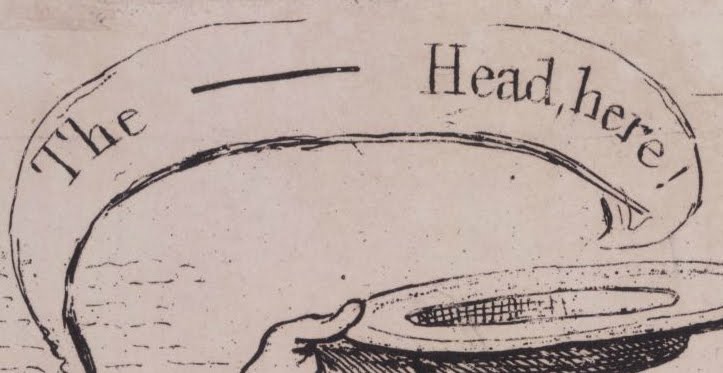
Joseph Priestley (standing) holds up a chalice and communion plate and states: "The King's* Head, here!"
Sir Cecil Wray (on our left) with a reddened face, pours himself some sherry and exclaims "Damn my eyes! but I'll pledge you that Toast tho Hell gapes for me". In the orange coat Richard B. Sheridan declares"O Heavins [sic]! why I empty a Chelsea Pensioner's small-beer barrel, in such a cause!". Charles James Fox's (centre) portly face is also reddened and as he raises his glass he says"My Soul & Body, both, upon the Toast!!!". Next to Fox is Horne Tooke who states"I have not drunk so glorious a Toast since I was Parson of Brentford, & kept it up with Balf & McQuirk!". To the right a rather drunk looking Theophilus Lindsey is saying"Amen, Amen". Behind this group are charicatured religious dissenters, from left to right saying:
"Hear our Prayers: & preserve us from Kings, & Whores of Babylon!!"
"Put enimity between us & the ungodly and bring us down the Heads of all Tyrants & usurpers quickly good Lord--Hear us"
"O, grant the wishes of these inheritance"
The frame on the back wall shows St. Paul's Cathedral, with three pigs eating from a trough, underneath it reads: 'A PIG's STYE, a View from Haskney'


* There are a couple of alterations within the above image, firstly the word 'King's' has been written into Priestley's quote, though later productions show only a dash (both above). Also, at the base of the image a word has been covered up (see below), and other prints show this incorporated. It may be that this was one of the original prints by Gillray and the alterations were made for legal reasons. All those at the dinner were adamant that no toast was made for the head of the King.


Tour of Lost Birmingham Nᵒ.20: Staying in Style & The Hotel (Temple Row)

The Hotel, at this time known as the Royal Hotel, c. 1800. Drawn by T. Hollins
and engraved by F. Eginton. In this image is also pictured the Dispensary.

The Hotel sat on Temple Row, opposite the St. Philip’s churchyard area, surrounded by smart town houses that were used by the wealthy. It had been built in line with the circa 1720s houses (right of image) which were most likely built by William Westley. The building on the far right was used as a dispensary of medicines for the poor and is explored here.

The Hotel was erected in 1772 by tontine subscription and was the first building in Birmingham to adopt the French styling of hotel. The term was only just coming into use at this time, and it was used to promote what was basically an inn as a more fashionable and refined place to stay. The Hotel provided accommodation for travellers to Birmingham, food and also had a fine assembly room attached which was enlarged in 1804.* There is little specific information about the running of Birmingham’s Hotel but guests would have probably unloaded from their carriage to be taken into the main reception room and had their hats and coats taken by a servant; they could then be shown to their room, and it seems that some of the more elegant rooms were upstairs.* There would have been a dining room for meals, there was a bar, and some some hotels had a coffee room as well.* They were usually sitting rooms, and these may have been divided into separate rooms for the gentlemen and ladies. A courtyard for carriages and stabling for horses was at the rear of the Hotel, and accessed through the gateway on the left of the building (see image above).

The exterior of the building was quite simple and relatively unornamented but it was admired for this elegance and was thought a superior building. It also maintained a reputation as a higher-class establishment throughout its life.* Its higher status was partly due to it not having the ‘annoyance of stage coaches’.* Stage coaches were long distance coaches which stopped at specific points on a set route and were deemed an inferior way to travel by the wealthy, mainly due to the traveller being bound to the path of the coach, and having to share the coach with strangers. Travelling post was a much more desirable way to get from place to place as the hirer of the post-chaise could decide where the travelled, with whom and when (like a taxi or hire car, as post-chaises could be hired with or without a coachman).* The Hotel was known for excellent posting facilities, always required of an exclusive hotel; it could accommodate post-chaises and had ‘an extensive supply of horses and carriages [...] always in readiness’.* The mail coach also called at the Hotel.

The front entrance of the Hotel led to a ‘spacious saloon’ where guests would have been greeted, and at the extremity of which was a large, grand staircase which led to the assembly room. The assembly room was eighty feet long, thirty feet wide with a lofty ceiling; it had an organ and space for an orchestra as well.* Assembly rooms of the time were designed to impress and Birmingham’s Hotel was thought to be decorated in a most ‘tasteful and decorative manner’.* There were three cut-glass chandeliers, six large mirrors along the walls and it also contained five decorative cut-glass lustres, all designed to reflect and enhance the candle-light and produce a sparkling effect.* The season in Birmingham was through the winter when eight or nine dancing and card assemblies would be held, as well as three or four music concerts, all by subscription, so as to keep the entertainments for the elite and leading families.

* References on request
NOTES
The 1791 riots began at the hotel; find out more here.
To find out more about assemblies, click here.
ROYAL HOTEL: In 1805 the Hotel applied to become the Royal Hotel after HRH the Duke of Gloucester stayed; Princess Victoria (the future Queen) also stayed in 1830, among many other distinguished guests that the proprietors would often list in their adverts.
PROPRIETORS:
DADLEY and PALMER: c.1780, 1787 (Thomas Dadley & Fielding Palmer)
PALMER: 1789
DADLEY: 1779, 1791, 1793
W. STYLES: 1800, 1808, died 1809
WILDAY: 1814 (Wm. Wilday d. 1818) (Mary, 1824) (Mr. Wilday, 1829)
FREDERICK DEE: newly fitted in 1830, 1838


Trade card for Royal Hotel under Frederick Dee, 1838.

Tour of Lost Birmingham Nᵒ.15: Assembly Rooms

An assembly. 1817. (Not a Birmingham image)

Anyone who enjoys dramatisations of Jane Austen's novels will understand the centrality of the assembly in the social lives of the Georgian and Regency middle classes. The guests at an assembly would not only dance, but drink tea, play cards, watch and listen to performances of music or theatricals and just generally socialise. The assembly was a great opportunity to socialise, gossip and, of course, flirt. Assemblies as a nation wide entertainment began towards the beginning of the 1700s; Defoe critically noted in about 1725 'the new mode of forming assembles [which was now] so fatally in vogue'.* What began as a novelty soon became 'part of the established urban scene'.* Birmingham had at least two permanent assembly rooms by the 1750s, one in the Square and the other in Bull Street.*** Balls or assemblies were often intertwined with other events such as Birmingham's Triennial Music Festival or other musical and theatrical performences.
Assemblies at the various rooms often operated in seasons, at the Hotel (later the Royal Hotel) in Birmingham the assemblies were held over the winter season by subscription.

The architecture of assembly rooms was often amongst the smartest, grandest and most elegant of the provincial towns which reflected their significance within middle class society, and Birmingham was no exception to this. Architecture and situation could also aid in asserting the respectibility of these establishments. Birmingham's most esteemed assembly rooms were situated in the upper parts of the town which had been built up from the early 1700s. These areas contained smarter, more expensive housing, and were away from the majority of the noise and bustle of the workshops in the older parts of the town. The assembly rooms were also situated in enclaves of the elite social life, the Hotel was opposite St. Philip's with its elegant walks, the assembly room in the Square was an enclosed environment with rules restricting the usage of surrounding properties and the Theatre on New Street also had an assembly room among its other entertainment facilities. As well as these smarter establishments though, there were also 'great rooms' in inns and public houses in which assemblies could be held; the Red Lion in Digbeth had one such room in the 1790s, and these would perhaps be attended by a more varied section of society.

By the early 19th century dancing assemblies began to be criticised by some as new dances such as the waltz were introduced, which involved more intimate contact with the dance partner.** The Birmingham preacher John Angell James (writing in the late 1820s) believed that dancing was immoral and stated that it should not 'be permitted to rise to a higher rank than that of mere physical training, which should be strictly confined to the school'.*** This last comment was directed towards women and girls, to whom the public assembly had been a intregal social activity, but at this time were being pushed by some like James into more virtuous pursuits (in James's words, being a 'good wife and mother'). One Birmingham ball in the 1820s was attended by Amelia Moilliet and her daughters, but she decided to not allow them to attend again.** Of course, these critisisms were not heeded by all and dancing assemblies retained some of their former popularity. In 1838 the subscribers to the assemblies at the Royal Hotel assembly rooms were still described as 'of the highest respectability in the town,*** and great care was to keep them select,*** but the assembly room at the Theatre Royal was by 1830 no longer used for its original purpose but instead for auctions, exhibitions and lectures.*** It seems that the surviving assemblies at Birmingham's Royal Hotel could be maintained by accepting only what was deemed as the very highest in society.

As the fashion for assemblies waned, so the buildings that had so popularly housed them became near obsolete. Some of these rooms could be used for other functions, such as at the theatre, but with the building of new, grand public buildings such as the Town Hall, these smaller premises would have suffered and the once grand assembly rooms would have become neglected. Birmingham's primary assembly room at the Royal Hotel was converted and taken over by the Birmingham Eye Hospital in 1861. The hospital moved to a custom built building in the 1880s and it is likely that the original building of the Royal Hotel was demolished not long afterwards.

* Peter Borsay, The English Urban Renaissance
** Leonore Davidoff & Catherine Hall, Family Fortunes: Men and Women of the English Middle Class 1780-1850
*** Other references on request